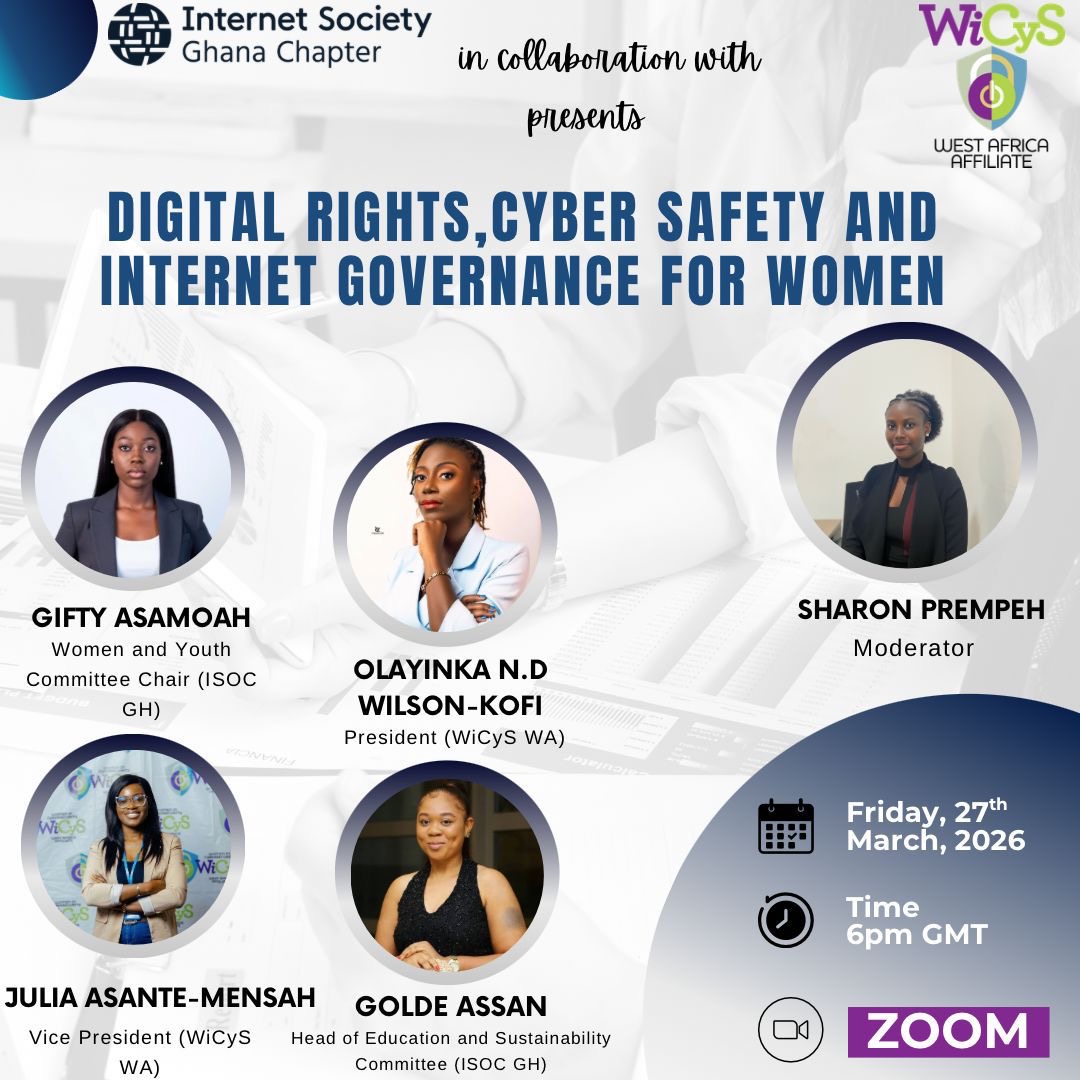
Women in Cybersecurity (WiCyS) West Africa and the Internet Society have called on women to actively engage in structured learning platforms, professional communities, and fellowship programmes as a means to close the gender gap in cybersecurity and internet governance. The advice was delivered during a webinar on “Digital Rights, Cyber Safety and Internet Governance for Women” in celebration of International Women’s Day.
Mrs. Olayinka Naa Dzama Wilson Kofi, President of WiCyS West Africa, emphasized that career progression in digital policy and cybersecurity requires combining learning, community involvement, and visibility. She encouraged women to join credible platforms such as the Internet Governance Forum, WiCyS, and other professional networks to access mentorship, scholarships, internships, and hands-on learning opportunities.
As part of practical guidance, Mrs. Wilson Kofi introduced a 30-day action framework, recommending that women identify a niche—such as Governance, Risk, and Compliance—join a local or regional community, undertake a visible activity like attending a webinar or volunteering, and share their progress on LinkedIn to build professional visibility.
Vice President of WiCyS West Africa, Miss Julia Asante Mensah, underscored the importance of online safety while building visibility. She advised enabling two-factor authentication, safeguarding personal information, and avoiding resharing harmful content online.
Madam Golde Assan, Head of Education and Sustainability at the Internet Society Ghana Chapter, highlighted the need for equitable internet access and safe digital learning environments, noting the influence of global organisations such as the International Telecommunication Union, ICANN, and the United Nations on national policies like Ghana’s Cybersecurity Act, 2020, and Data Protection Act, 2012.
Madam Gifty Asamoah, Women and Youth Committee Chair of the Internet Society Ghana Chapter, stressed that women’s participation in digital policy-making is crucial, as their absence contributes to gaps in addressing issues like online stalking, impersonation, and cyber abuse. She also pointed out challenges including limited resources, financial constraints, and the perception of male dominance in technology fields.
Stakeholders concluded that consistent, small actions—such as joining professional communities, participating in policy discussions, and engaging mentors—can provide women with critical entry points to establish successful careers in cybersecurity while helping shape inclusive digital policies.