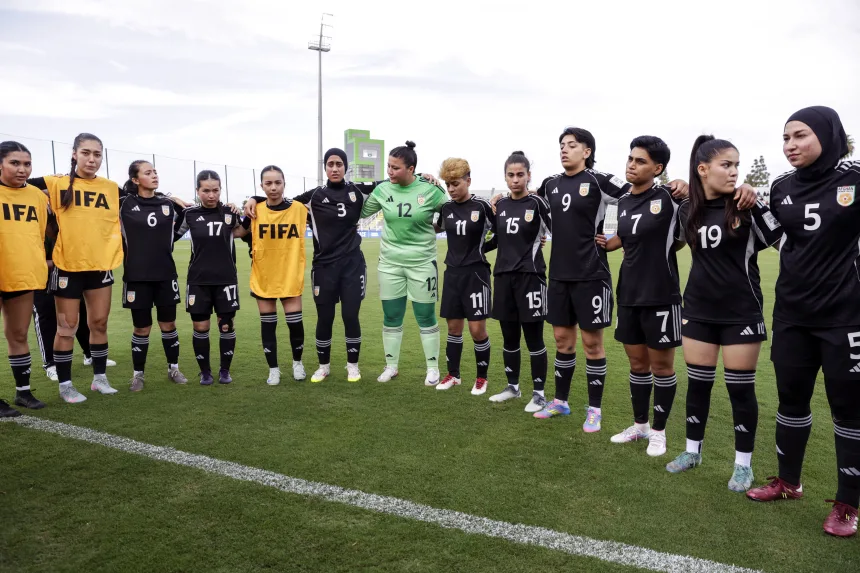
Afghanistan’s women footballers living in exile across several countries are set to regain official international status after a historic rule change by world football governing body FIFA.
The decision, taken at a FIFA Council meeting in Vancouver, allows the Afghanistan women’s national team to be formally recognised and compete in international fixtures despite the absence of support from the country’s domestic football authority.
For years, Afghan female players have been unable to represent their country following the Taliban’s return to power in 2021, which led to the suspension of women’s sports and forced many athletes into exile in countries including Australia, the United States and parts of Europe.
Under the previous regulations, FIFA recognition of a national team depended on approval from a country’s football federation. However, Afghanistan’s federation—now operating under Taliban influence—has not endorsed women’s football, effectively excluding the team from official competition.
The new amendment empowers FIFA’s council to approve national team participation in exceptional circumstances where players are unfairly denied representation due to external restrictions beyond their control.
FIFA President Gianni Infantino described the move as a major step forward for global sport, saying it ensures that Afghan women can finally compete under their national identity in official matches.
The Afghan women’s squad, previously competing as Afghan Women United under a refugee designation, has long campaigned for official recognition. Many players were evacuated after the Taliban takeover, with support from activists including former captain Khalida Popal.
The ruling is being viewed by players as the end of a long struggle for identity and recognition in international football. Vice captain Fatima Yousufi said the decision restores a sense of national pride and belonging that had been taken away.
Although the team will miss qualification for the 2027 Women’s World Cup, it is now expected to participate in future international competitions, including the qualifying pathway for the 2028 Olympic Games in Los Angeles.
FIFA has also pledged financial and technical support to assist the team’s transition back into formal international football over the coming years.
The decision is expected to set a wider precedent within global sport, giving FIFA authority to intervene in cases where national federations are accused of excluding athletes on discriminatory grounds.