A Feature by Dr Prince-Joseph Ayiku
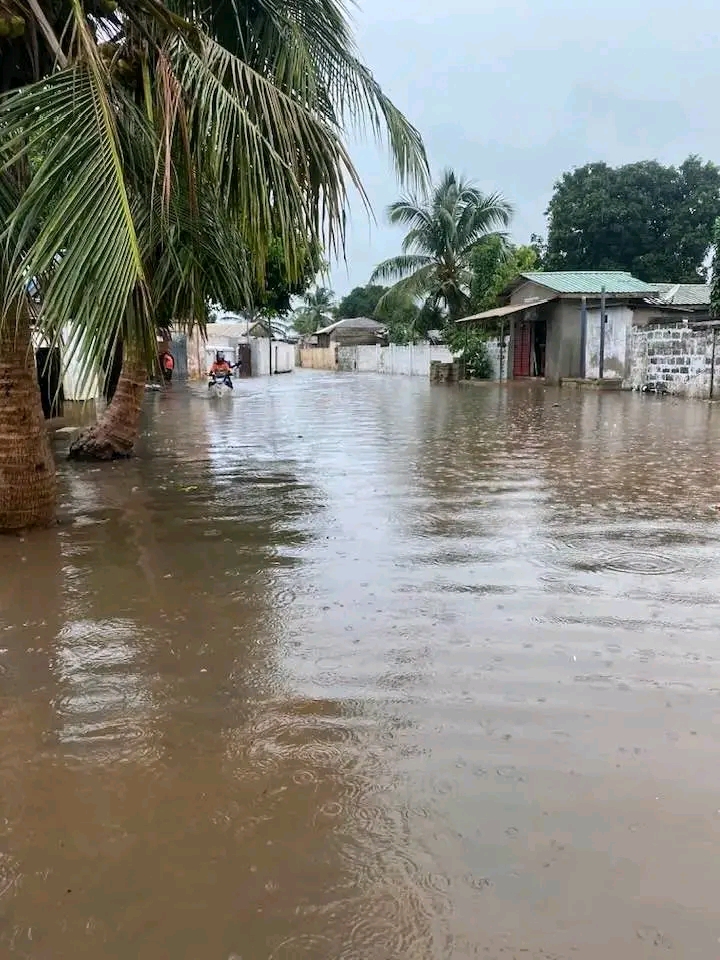
Every rainy season, the same distressing scenes unfold across many parts of Ghana. Too many roads become rivers, homes are submerged, businesses shut their doors and families are left counting their losses.
From Accra and Tema to Kumasi, Takoradi, Kasoa and other rapidly growing urban centres, flooding has become an all-too-familiar disaster, claiming lives, destroying property and placing enormous financial pressure on both government and households.
While climate change and increasingly unpredictable rainfall have heightened the risk of flooding, experts argue that the devastation is not caused by nature alone. They contend that weak enforcement of planning regulations, indiscriminate development and the continued encroachment on wetlands and natural drainage systems have significantly increased the country’s vulnerability.
As flood disasters become more frequent, attention is increasingly turning to the institutions responsible for physical planning and development control. Are planning authorities doing enough to safeguard the natural systems that protect communities from flooding, or are regulatory failures contributing to the growing crisis?
Nature’s First Line of Defence
Wetlands are among the world’s most valuable natural ecosystems and play an indispensable role in flood management. Marshes, swamps, lagoons, floodplains, estuaries and other low-lying waterlogged areas naturally absorb, store and gradually release excess water during periods of heavy rainfall.
Environmental experts often describe wetlands as giant natural sponges because of their remarkable ability to retain stormwater that would otherwise inundate surrounding communities.
Beyond reducing flood risks, wetlands recharge groundwater, filter pollutants, protect biodiversity and help regulate local climatic conditions.
Recognising their ecological importance, Ghana is a signatory to the Ramsar Convention and has designated several wetlands as internationally protected sites. These include the Sakumo Ramsar Site, the Densu Delta, Muni-Pomadze, the Keta Lagoon Complex and the Songor Lagoon wetlands.
Despite these protections, many wetlands continue to come under intense pressure from urban expansion, land reclamation and illegal construction.
Environmental scientists warn that once wetlands are filled with sand or converted into residential and commercial developments, communities lose one of their most effective natural buffers against flooding.
Urban Growth and Environmental Pressure
Over the past three decades, rapid population growth, rural-to-urban migration and increasing demand for housing and commercial infrastructure have fuelled Ghana’s urban expansion.
Although this growth has supported economic development, it has also placed considerable pressure on environmentally sensitive areas.
Across Greater Accra, Ashanti, Central, Western and Eastern regions, wetlands and flood retention zones have increasingly given way to residential estates, shopping centres, industrial facilities, transport infrastructure and informal settlements.
Communities such as Weija, Adentan, East Legon, Ashaiman, Kasoa, Kumasi and parts of Tema have witnessed significant development within flood-prone areas and natural drainage corridors.
The consequences become painfully evident whenever heavy rains fall. Water that wetlands would ordinarily absorb is diverted into surrounding communities, drainage systems quickly become overwhelmed and floodwaters rise with alarming speed.
The result is more destructive flooding, higher recovery costs and increased risks to lives and livelihoods, particularly among vulnerable communities.
The Water Resources Commission (WRC) and the Environmental Protection Agency (EPA) have repeatedly identified uncontrolled development within wetlands as a major factor contributing to urban flooding across Ghana.
The Role of Planning Authorities
Although flooding is often associated with heavy rainfall, many urban planners insist that the severity of the disaster is largely determined by how cities are planned, developed and managed.
Planning authorities are mandated to ensure that physical development follows approved planning schemes and that environmentally sensitive areas are protected from encroachment.
However, questions continue to be raised about the effectiveness of development control across many rapidly expanding urban centres.
In numerous communities, buildings have sprung up within wetlands, waterways and floodplains, while natural drainage channels have either been narrowed or blocked entirely.
Urban planning experts argue that these developments rarely occur overnight. Rather, they are often the result of weak enforcement of planning regulations, inadequate monitoring and, in some instances, failure to act against unauthorised construction.
The cumulative effect has been the gradual disappearance of natural flood buffers, leaving many communities increasingly exposed whenever heavy rains occur.
A Robust Legal Framework
Ghana’s planning and environmental laws provide a comprehensive framework for regulating physical development and safeguarding environmentally sensitive areas.
Foremost among them is the Land Use and Spatial Planning Act, 2016 (Act 925), which serves as the principal legislation governing spatial planning and development control.
The Act requires all physical developments to conform to approved planning schemes and empowers planning authorities to regulate development, prevent unauthorised construction, protect environmentally sensitive areas and enforce planning standards.
It also promotes orderly physical development and sustainable land-use practices aimed at reducing environmental risks.
Under the Act, Metropolitan, Municipal and District Assemblies (MMDAs) are responsible for granting development permits, conducting technical assessments and ensuring compliance with approved planning regulations.
The Environmental Protection Agency (EPA), on its part, is mandated to safeguard the environment by ensuring that projects likely to have significant environmental impacts undergo the necessary environmental assessments before implementation.
Taken together, these legal provisions provide Ghana with a sound institutional framework for sustainable urban development.
The challenge, many experts observe, lies not in the absence of laws but in ensuring their consistent and impartial enforcement.
Building Flood-Resilient Cities
Urban planners and environmental experts believe that reversing Ghana’s flooding challenge will require a combination of stronger regulation, better planning and greater public awareness.
One of the foremost priorities, they say, is the consistent enforcement of development controls without political, social or economic interference.
Wetlands and buffer zones must also be recognised as essential public infrastructure rather than vacant land awaiting development.
Experts further recommend that major development applications should be supported by hydrological studies, environmental impact assessments and comprehensive flood-risk evaluations before permits are granted.
Modern technologies, including Geographic Information Systems (GIS), drones and satellite imagery, can also help planning authorities detect and monitor encroachments more efficiently.
Beyond regulatory enforcement, public education remains critical.
Many citizens continue to regard wetlands as idle land suitable for construction, yet these ecosystems perform vital environmental functions that protect entire communities from flooding.
Greater collaboration among planning authorities, environmental regulators, water resource managers and disaster management institutions is equally important if Ghana is to develop a coordinated and sustainable approach to flood prevention.
Dr Prince-Joseph Ayiku is the Chief Executive Officer of Lakeside Estate and a development practitioner with extensive expertise in sustainable urban development, environmental governance, land-use planning, housing policy and infrastructure resilience.