
















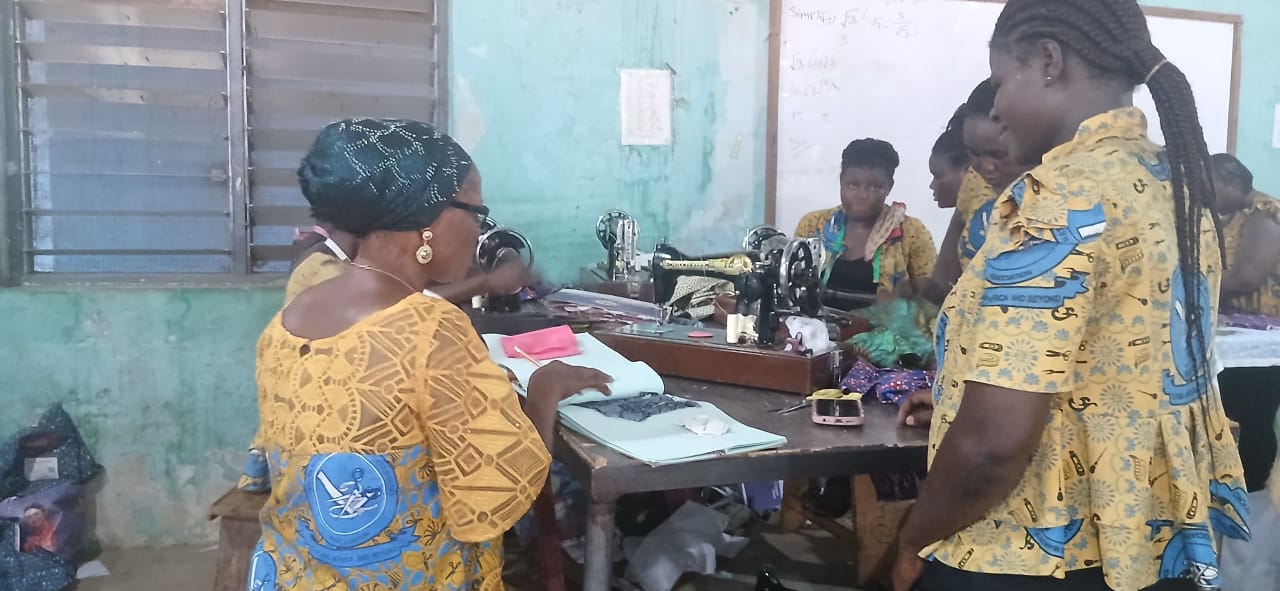
Fifty-four apprentices of the Ghana National Tailors and Dressmakers Association (GNTDA), Bolgatanga Central Zone One, have completed their apprenticeship training and taken the final Trade Test Examination to qualify for professional certification.
The candidates, comprising 11 males and 43 females, underwent both written and practical assessments supervised by officials from the Standards, Trade Testing and Certification Department of the National Vocational Training Institute (NVTI).
The examination was aimed at assessing the knowledge, technical competence and practical skills acquired by the apprentices during their training and determining their readiness to enter the tailoring and dressmaking profession.
The successful completion of the programme is expected to equip the young people with skills that can support self-employment and provide them with opportunities to establish their own businesses.
Chairman of the GNTDA, Bolgatanga Central Zone One, Mr Shaibu Karim, congratulated the apprentices for reaching the final stage of their training and urged them to remain committed to the trade.
He encouraged them not to abandon the profession after acquiring the skills, stressing that patience, hard work and creativity could enable them to build sustainable sources of income.
Mr Karim also urged the apprentices to continuously upgrade their skills to keep pace with changing customer preferences and demands within the fashion industry.
He said developing their creativity and improving the quality of their work would be essential to building successful careers and becoming self-reliant.
Meanwhile, the Zonal Coordinator, Ms Rebecca Asirah, has appealed to individuals, non-governmental organisations and other benevolent organisations to support the newly trained apprentices as they prepare to establish themselves.
She said some of the beneficiaries came from less privileged backgrounds and could face difficulties acquiring the equipment needed to start their businesses.
Ms Asirah appealed for assistance in the form of sewing machines, workshop spaces and other working tools to enable the apprentices to translate their training into viable businesses.
She said such support would give the young people the opportunity to practise and sharpen their skills, strengthen their creativity and contribute productively to their communities.
She stressed that providing the necessary tools and working spaces would help bridge the gap between vocational training and actual employment, particularly for apprentices who lacked the financial capacity to establish themselves after completing their training.






