Nestlé Ghana has announced fresh investment plans to expand its manufacturing operations after President John Dramani Mahama commissioned a GH¢59 million upgrade of the company’s evaporated milk production line at its Tema factory.
The latest expansion, commissioned on Thursday, October 8, 2026, is expected to increase production capacity, improve operational efficiency and strengthen the company’s ability to supply Ghanaian consumers and regional markets.
The development also comes with plans by the company to invest an additional GH¢138 million to double its Milo production capacity and install another evaporated milk production line, signalling further expansion of its manufacturing footprint in Ghana.
The new investment commitments build on an earlier GH¢175.4 million investment in a cereal production line, reinforcing Nestlé Ghana’s focus on expanding local manufacturing and serving markets across Central and West Africa.
Mahama highlights conditions for industrial growth
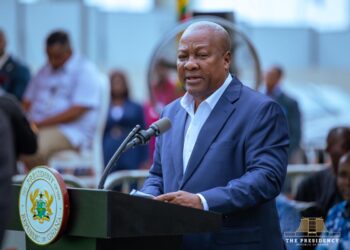
Speaking at the commissioning ceremony, President Mahama emphasised the importance of macroeconomic stability and reliable infrastructure in attracting investment and encouraging businesses to expand their operations.
He identified predictable fiscal policies, controlled inflation, stable foreign exchange rates and dependable electricity supply as essential conditions for building investor confidence.
The President assured businesses that his administration would continue pursuing policies aimed at maintaining economic stability and improving infrastructure to support industrial development.
“Capital goes where it is safe, but it stays and expands where there is stability and supporting infrastructure,” he said.
He added that reliable power supply and sound economic management would remain important to the government’s efforts to transform Ghana’s industrial sector.
Nestlé reaffirms confidence in Ghana
Nestlé Ghana Managing Director Salome Azevedo described the commissioning as a demonstration of the company’s long-term commitment to the country and confidence in its manufacturing prospects.
She said the investment reflected Nestlé’s commitment to local production and its ambition to strengthen Ghana’s role in supplying consumer products to markets across the region.
“This milestone is more than the completion of a major investment; it is a strong expression of Nestlé’s confidence in Ghana, our enduring commitment to local manufacturing, and our conviction that Ghana will continue to play a leading role in the future of Central and West Africa,” she said.
The expanded evaporated milk production line is expected to improve the company’s manufacturing capabilities while supporting its efforts to meet demand in Ghana and neighbouring markets.
Manufacturing expansion and regional ambitions
The latest investment plans point to continued activity in Ghana’s consumer goods manufacturing sector, with Nestlé seeking to increase production capacity across multiple product lines.
The planned expansion of Milo production, alongside the additional evaporated milk line, is expected to further strengthen the company’s local manufacturing operations.
For Ghana, the investments align with broader efforts to increase domestic production, attract long-term private-sector capital and develop the country as a regional manufacturing and distribution hub.
However, the company has not provided specific timelines for completing the proposed GH¢138 million expansion or detailed figures on the additional production volumes expected from the projects.