Finance Minister Dr Cassiel Ato Forson has called on African countries to move beyond reliance on government budgets to finance the continent’s growing energy infrastructure needs.
He said the scale of Africa’s energy deficit required governments to mobilise private capital and explore innovative financing models to expand energy systems and support industrialisation.
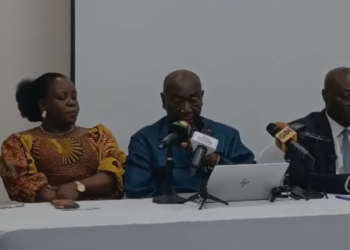
Speaking at the 2026 Future of Energy Conference (FEC) in Accra on Wednesday, Dr Forson said public finances alone could not provide the resources required to close the continent’s energy financing gap.
The conference, organised by the Africa Centre for Energy Policy (ACEP), was held under the theme “Powering Africa’s Industrial Transformation: Energy Systems for Value Addition and Competitiveness.”
According to Dr Forson, financing mechanisms such as guarantees, blended finance, local currency funding, stronger capital markets and credible public-private partnerships would be critical to attracting the investment needed for Africa’s energy transition.
Energy deficit threatens industrialisation
Dr Forson noted that nearly 600 million Africans remain without access to electricity, while Africa attracts only about two per cent of global clean energy investment.
He said the twin challenges of inadequate energy infrastructure and limited financing were undermining efforts by African countries to industrialise and expand productive capacity.
He therefore urged governments to create conditions capable of attracting long-term private investment into energy infrastructure while ensuring that such investments generate employment and support local value addition.
The Finance Minister also warned against allowing Africa’s natural resources to continue leaving the continent in raw form while finished products are imported.
He cited cocoa, bauxite and critical minerals as examples of resources that could support stronger industrial development if more processing and manufacturing were undertaken locally.
“Across Africa, we export cocoa and import chocolate. We export bauxite and import aluminium products. Now we risk exporting critical minerals only to import batteries. This must change,” he said.
Stability key to attracting investment
Dr Forson also identified macroeconomic stability as an important condition for attracting long-term investment.
He said inflation, exchange-rate volatility, high interest rates, unsustainable debt and fiscal indiscipline could increase the cost of doing business and discourage investment in productive sectors.
Referring to Ghana’s significant decline in inflation over the past two years, the Minister said the country’s recent economic progress demonstrated the importance of restoring stability as a foundation for industrial expansion.
He urged policymakers to use the improved economic environment to attract private capital, increase production and create jobs.
“Stability is obviously not the destination. It is the launchpad for transformation,” he said.
UNECA calls for value addition around resources
Economic Affairs Officer at the United Nations Economic Commission for Africa (UNECA), Dr Marit Kitaw, meanwhile, called for a rethink of how investments in critical minerals and energy infrastructure are located across Africa.
She introduced the concept of “development shoring,” which she said should encourage investment in locations where it could deliver the greatest developmental impact rather than focusing exclusively on production costs.
For Africa, she explained, this would mean locating more mineral processing, component manufacturing and green industries closer to sources of minerals and renewable energy.
She said such an approach should also involve developing local suppliers, technical skills, research capacity and regional markets.
According to Dr Kitaw, this would enable African countries to retain more value from their natural resources while creating stronger and more resilient regional industrial ecosystems.
She stressed that development shoring did not mean abandoning efficiency but expanding its definition to include resilience, long-term stability and developmental impact.
Call for deeper investment partnerships
Dr Kitaw further urged African countries and international investors to develop partnerships that go beyond the extraction and purchase of raw minerals.
She advocated joint ventures, co-investment in processing and manufacturing, technology transfers, regional centres of excellence and long-term offtake agreements tied to value addition.
She said the success of partnerships should ultimately be measured by the productive capabilities and lasting development benefits they leave behind in Africa.
“The central question for every partnership should be: what productive capability and what lasting development benefits will remain in Africa after the extraction of the minerals?” she asked.