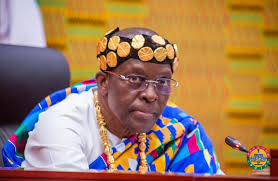
Alban Sumana Kingsford Bagbin, Speaker of Parliament, has renewed calls for reforms to deepen decentralisation in Ghana, stressing that Parliament must become more accessible and responsive to citizens across the country.
Speaking at the 2026 edition of the Speaker’s Breakfast Forum in Accra, Mr Bagbin said Ghana’s democratic progress would only be meaningful if governance structures empowered all citizens, particularly women, youth and marginalised groups.
The forum, organised by the Office of Parliament in collaboration with the STAR-Ghana Foundation, was held under the theme “Parliamentary Decentralisation: Taking Parliament Closer to the People.” It brought together Members of Parliament, local government officials, traditional authorities, academics and civil society representatives to discuss strategies for strengthening Ghana’s decentralisation agenda.
Mr Bagbin said while Ghana had made progress in decentralisation since the early 1990s, evolving governance challenges required reforms to ensure that development reached communities across the country.
“A decentralised system is one where everyone has a seat at the breakfast table,” he said. “All citizens should be at the table, and none should be on the menu.”
The Speaker also urged legislators to communicate in simple and accessible language when addressing national issues so that citizens could better understand parliamentary proceedings.
During the discussions, Wisdom Agape Newman, presenting on behalf of Badu Agyeman, outlined proposals to guide the decentralisation process. These included organising a national validation forum, establishing a working group to develop an implementation plan, and piloting decentralised parliamentary initiatives in selected constituencies.
According to him, such steps would help create a structured presence of Parliament within communities while improving accountability and citizen engagement.
The Executive Director of the STAR-Ghana Foundation, Ibrahim-Tanko Amidu, described the forum as an important platform for addressing the growing gap between citizens and Parliament.
He emphasised that improving public understanding of parliamentary work and strengthening dialogue between lawmakers and citizens were critical to sustaining democratic governance.
Also addressing the gathering, Ahmed Ibrahim said parliamentary decentralisation was essential for promoting inclusive and accountable governance.
“It is about sharing legislative authority with the people and empowering local voices,” he stated.
Other speakers, including Alexander Kwamena Afenyo-Markin and Kweku George Ricketts-Hagan, highlighted the role decentralisation could play in strengthening oversight, rebuilding public trust and enhancing citizen participation in national decision-making.
Officials of Parliament noted that initiatives such as community outreach programmes, live broadcasts of proceedings and sign language interpretation were already being expanded to make the legislature more inclusive and accessible.
Participants concluded that advancing parliamentary decentralisation would not only deepen democracy but also ensure that governance and development were experienced directly by communities across Ghana.