
















In a move aimed at fostering transparency and economic collaboration, the Bank of Ghana (BoG) has committed to engaging the private sector and market traders at least twice a year to discuss key monetary policy decisions, including the monetary policy rate.
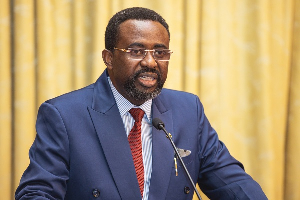
The announcement, made by the Governor of the Central Bank, Dr. Johnson Asiama, comes in response to growing calls from private sector groups and business stakeholders at the just-ended National Economic Dialogue. These groups have urged for more direct involvement in shaping monetary policies that significantly impact business operations and economic stability.
Dr. Asiama emphasized the BoG’s commitment to greater openness, stating that increased engagement will help businesses understand the rationale behind key monetary decisions.
“The private sector has asked for two key things, and I want to assure them that we will deliver on both. First, they want regular interactions with us twice a year, which aligns perfectly with our commitment to transparency,” he said.
He further highlighted the need to demystify central banking for ordinary Ghanaians, particularly market traders and small business owners who often struggle with rising interest rates.
“We need to get Ghanaians to understand what we do as a central bank. I was telling the GUTA President, for example, that we will be coming to Makola to explain why interest rates are adjusted and how these decisions affect the economy,” Dr. Asiama added.
Businesses in Ghana have long been concerned about the impact of high lending rates on their operations. According to Bank of Ghana data, average lending rates remained around 30% in the second half of 2024, after starting the year at 32%. In December 2024, the average lending rate stood at 30.25%, following slight fluctuations in October (30.07%) and November (30.45%).
A major factor contributing to these high borrowing costs has been the central bank’s monetary policy rate, which businesses argue has made credit more expensive and hindered expansion.
By directly engaging businesses and traders, the BoG aims to clear misconceptions about monetary policy decisions and help businesses make informed financial choices.
This initiative signals a shift towards more inclusive economic policymaking, where businesses, traders, and financial institutions have a direct line of communication with policymakers. The twice-yearly engagements will provide an opportunity for businesses to voice their concerns while gaining insights into the economic factors driving interest rate adjustments.
For many businesses struggling with high borrowing costs, this dialogue could provide much-needed clarity and enable them to plan better for the future. By fostering transparency and economic literacy, the Bank of Ghana is taking a crucial step toward building a stronger and more resilient economy.






