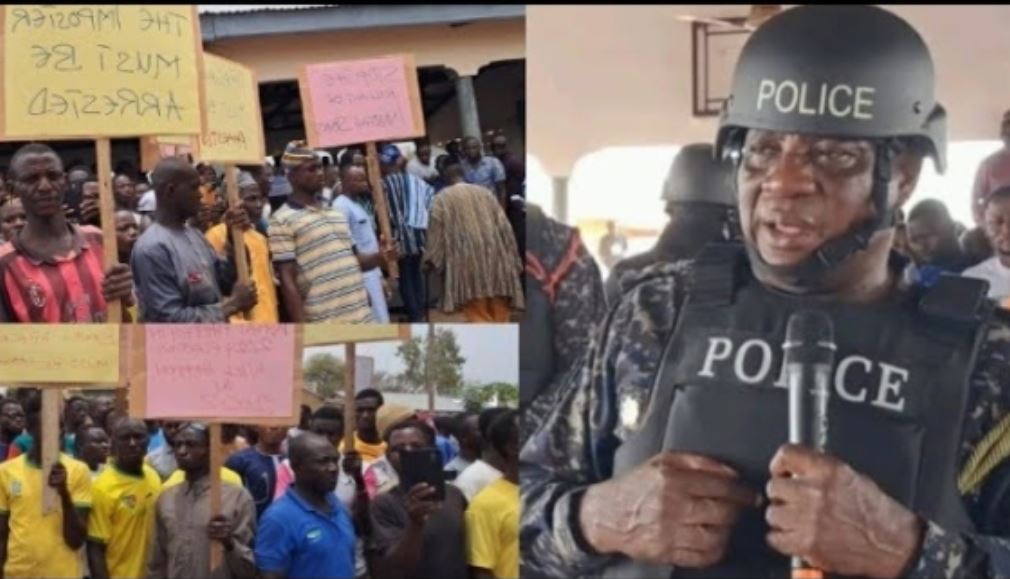
Upper East Regional Minister, Akambugri Donatus Atanga, has downplayed interpretations that recent hooting at the Inspector General of Police (IGP), Christian Tetteh Yohuno, during his visit to Bawku was in rejection of peace efforts. Instead, he says the incident reflected deep-rooted frustration with the state’s response to the protracted conflict.
Appearing on JoyNews’ Newsfile on Saturday, Mr. Atanga clarified that the youth’s discontent stemmed not from the IGP’s appeal for calm, but from remarks perceived as tone-deaf amid the community’s ongoing suffering. Specifically, he pointed to the IGP’s promise of preferential police recruitment as an incentive for peace — an offer that, according to the minister, fell flat.
“They were not hooting because he said ‘give peace a chance.’ They were hooting because they’re tired,” Atanga stated. “Their concern is not about employment perks — they want real peace. The promise of jobs in exchange for silence was not what they came to hear.”
He added that the youth had assembled hoping for a firm commitment to resolving the long-standing security crisis in Bawku — not symbolic gestures. For them, he said, the idea that police recruitment could substitute for meaningful peace and justice was frustrating and dismissive of their lived realities.
The region has been plagued by sporadic violence linked to ethnic and political tensions, and many locals say state security agencies have failed to restore lasting calm. The incident with the IGP, Atanga suggested, underscores a larger communication gap between national authorities and affected communities.
His remarks spotlight growing concerns over the government’s engagement strategies in conflict zones. They also raise critical questions about how peacebuilding is framed — whether as a genuine response to structural grievances or as a transactional offer.
Residents continue to demand not only peace but justice and equity in how security resources and economic opportunities are distributed.
The hooting, Atanga indicated, may be a symptom of a larger problem: a community that feels unheard.