The classroom is part of the economy. Why the quarrel between finance ministers and social sectors ministers’ rests on a false divide, and how governments can move beyond it
Every budget season, a familiar scene plays out in capitals across Africa and beyond. The minister of health arrives at the finance ministry with evidence of crowded wards, missing medicines and doctors leaving for better pay abroad. The minister of education brings figures on overcrowded classrooms and untrained teachers. The minister of social protection explains how many vulnerable households a modest increase could reach.
Across the table sits the finance minister, armed with a different set of numbers covering debt service, revenue shortfalls, deficit targets and the expectations of creditors and rating agencies. To the finance minister, each request is a claim on scarce resources. To the social ministers, the finance ministry is the gatekeeper standing between their sectors and the people they serve.
The political scientist Aaron Wildavsky famously described budgeting as a contest between guardians of the treasury and advocates of spending. The description captures something real about how governments work. But it rests on an assumption worth questioning. It assumes that the finance minister guards the economy while the social ministers spend on society, as though the two were separate domains competing for the same pot. That assumption is the source of much of the tension, and it is mistaken.
Why the tension runs so deep
The friction between finance and social ministries is not simply a clash of personalities or departmental interests. It is built into the institutions of public finance.
The first source is time. Finance ministries work to annual budgets and medium-term fiscal targets. The returns to education, health and early childhood investment unfold over decades. A child who stays in school this year becomes a more productive worker, a healthier parent and a larger taxpayer a generation later. Those returns rarely appear within the horizon of a fiscal framework.
The second source is accounting. Budget classifications treat roads, dams and power plants as capital investment, while teachers’ salaries, nurses’ wages and cash transfers are recorded as recurrent spending. The labels carry moral weight. Investment sounds prudent, and recurrent spending sounds like consumption to be contained. Yet a road without trained engineers, healthy workers and literate traders produces far less than its builders promise.
The third source is language. Social sector ministries are often called spending ministries, a phrase that quietly assigns them the role of cost centres. Finance ministries, by contrast, are seen as the stewards of growth. The vocabulary itself encodes the false divide.
The fourth source is external pressure. Under fiscal adjustment programmes, finance ministries negotiate deficit targets with lenders, and social budgets are often the easiest place to find savings. Cutting a teacher’s allowance or delaying a health facility is administratively simpler than restructuring a state enterprise or broadening the tax base.
What the evidence shows
The case for treating social and economic policy as one field rests on evidence, not sentiment.
Consider education. When researchers tracked young Ghanaians who won secondary school scholarships by lottery in 2008, they found the winners were more likely to finish school, healthier in their habits and, among women, earning more years later. A line item that a finance ministry might classify as social spending turned out to raise productivity, earnings and future tax revenue.
Consider cash transfers. Ghana’s Livelihood Empowerment Against Poverty programme was designed as protection for the poorest households. Its impact evaluation found beneficiaries saving more, lending more and becoming more creditworthy. In South Africa, the old age pension was found to increase employment among younger household members, because the transfer financed job search, migration and childcare. Programmes classified as welfare were doing the work of labour market policy.
Consider health financing. Ghana’s National Health Insurance Scheme is funded largely through a levy on goods and services. A fiscal instrument became the foundation of a social right, and a healthier workforce in turn sustains the economic activity on which the levy depends. In such cases the finance ministry and the health ministry are not adversaries. They are partners in a single circuit.
History offers an even more striking example. In the early years after independence, Ghana established a provident fund to provide retirement income for formal sector workers. Its accumulated savings were invested in public instruments, and by the mid-1970s the fund had become the country’s largest source of investment finance, helping to build roads, schools and water systems. A pension scheme, the classic social programme, was also a central pillar of development finance.
When the divide does damage
The costs of the false divide become visible when finance and social ministries pull in opposite directions.
Ghana’s teacher trainee allowance offers a cautionary tale. For years, admission quotas were imposed on teacher training colleges to contain the cost of the allowance. The fiscal saving was real, but so was the result, a persistent shortage of trained teachers in basic schools. When the government later replaced the allowance with student loans, partly to meet fiscal commitments, trainees and teacher unions mobilised, the issue entered the 2016 election, and the allowance was restored in 2017. A decision framed as fiscal discipline produced neither lasting savings nor a solution to the teacher shortage.
The structural adjustment era offers a broader lesson. User fees in public health facilities, introduced in the 1980s under the name cash and carry, reduced access to care for poorer households. Savings recorded on the finance ministry’s ledger reappeared elsewhere as illness, lost workdays and weakened trust in the state.
Even lenders have come to recognise the problem. When Ghana entered its Extended Credit Facility with the IMF in 2023, the programme included a floor on social spending, an acknowledgement that the social sectors cannot simply absorb the costs of adjustment. Yet a spending floor still treats social provision as a cost to be protected rather than an investment to be valued. It softens the divide without dissolving it.
The finance minister’s legitimate concerns
None of this means finance ministers are wrong to worry. Debt is real, and a fiscal crisis harms the poor first and hardest. Badly designed social programmes can waste resources, and social sector ministries are not always efficient stewards of the money they receive. A finance ministry that says no to poorly targeted spending, inflated payrolls or programmes with no evidence of results is doing its job.
The point is not that social ministers are always right and finance ministers always wrong. It is that both are working on the same economy and the same society, and that a fiscal framework blind to social returns is as incomplete as a social programme blind to fiscal costs. The guardian of the treasury is also, whether acknowledged or not, a guardian of human capability. The advocate of social spending is also an investor in future growth.
From rivalry to joint stewardship
Governments can take practical steps to turn this rivalry into partnership.
- Reclassify the budget. Spending should be classified by its contribution to development rather than by the inherited divide between capital and recurrent, economic and social. Some governments have experimented with this. New Zealand’s 2019 wellbeing budget, for example, required ministries to make joint bids against shared priorities.
- Appraise jointly. Finance and sector ministries should appraise major programmes together, examining the social effects of economic measures and the economic effects of social ones.
- Lengthen the horizon. Medium-term expenditure frameworks should incorporate the long-run returns of education, health and social protection, and fiscal risk assessments should count the costs of underinvestment as well as the costs of spending.
- Build shared capacity. Economists should be placed in social ministries and social policy analysts in finance ministries, so that each understands the other’s evidence and constraints.
- Protect investments, not just floors. In adjustment programmes, governments should negotiate protection for programmes with demonstrated returns, not just minimum spending levels.
Balancing Books and Building Lives
Thandika Mkandawire argued that social policy in a development context must serve production, protection, reproduction, redistribution and social cohesion together. If that is true, then the finance minister and the social ministers are not managing separate accounts. They are reading the same ledger through different lenses.
The finance minister sees deficits, debt and revenue. The minister of education sees children, teachers and classrooms. Both are looking at the same national future. The task of good government is to bring those lenses into focus, so that every budget decision is understood for what it truly is, an economic and a social choice at once. The quarrel between the treasury and the classroom will never disappear entirely, nor should it. But it can become a conversation between partners rather than a contest between rivals.
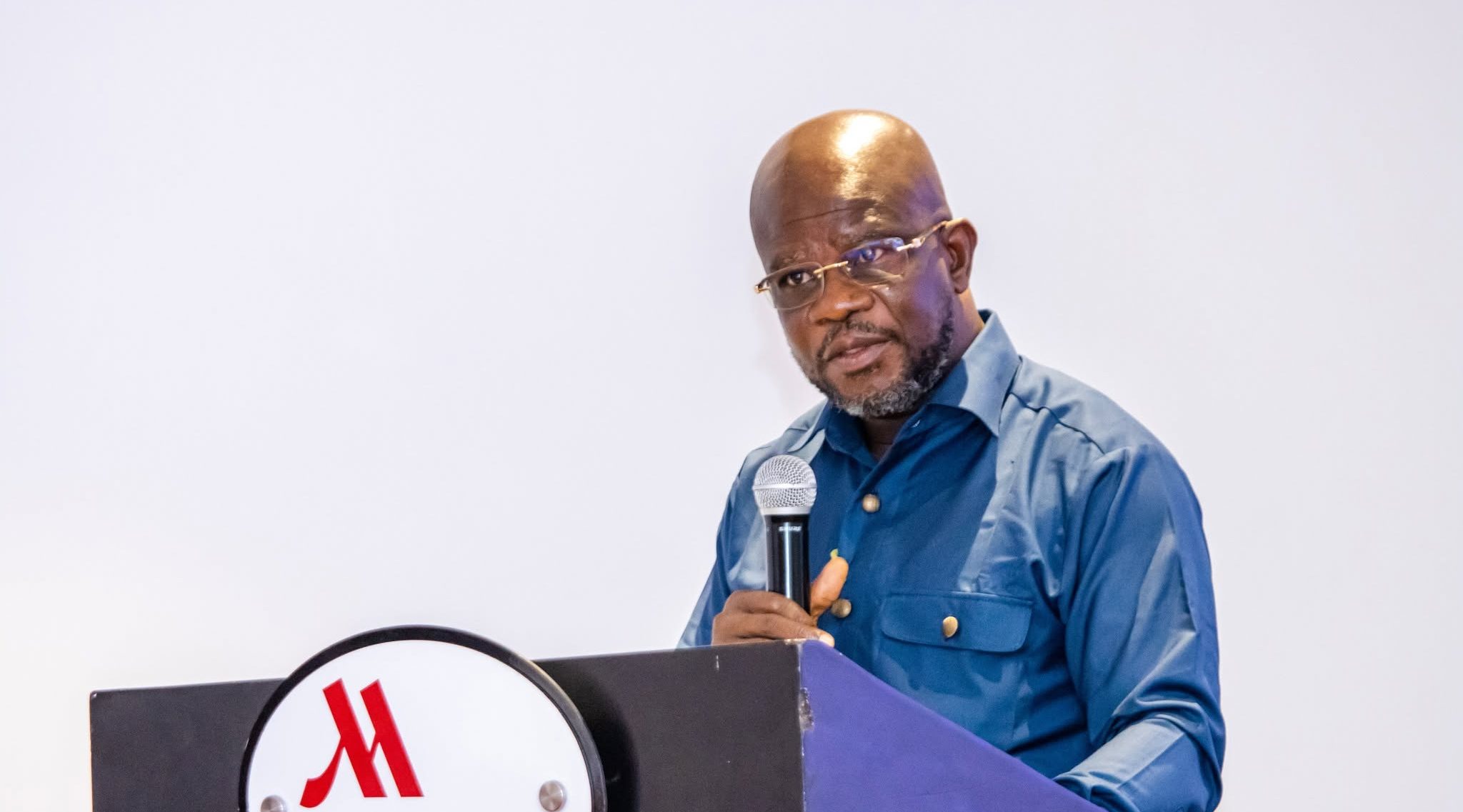
Michael Kpessa-Whyte is an Associate Professor of Public Policy & Governance at the Institute of African Studies, University of Ghana, Legon, and currently the Director-General of the State Interests and Governance Authority (SIGA) in Ghana. He is also a scholar of African social policy and a Co-Principal Investigator of the Gender Equitable Transformative Social Policy for Africa (GETSPA) project based at the University of Ghana.