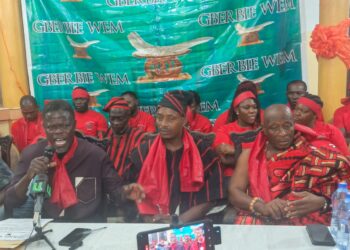
The National Executive Committee (NEC) of the Canoe and Fishing Gear Owners Association of Ghana (CaFGOAG) has reaffirmed its commitment to tackling destructive fishing practices that threaten the sustainability of Ghana’s fishing industry.
During a strategic meeting at the Tema Canoe Basin, the NEC reviewed a report detailing recent engagements with landing beach executives from Ghana’s four coastal regions. These discussions, conducted under the Fishers’ Rights Project, aimed to address illegal fishing activities and their impact on the artisanal fishing sector.
CaFGOAG’s National President, Nana Kweigyah, emphasized that immediate actions would be rolled out to engage key fishing communities in efforts to curb illegal practices. The NEC also developed a series of policy recommendations to be presented to the Ministry of Fisheries and Aquaculture Development and the Fisheries Commission for consideration in a comprehensive national strategy.
The Fishers’ Rights Project, spearheaded by CaFGOAG with support from the Transform Bottom Trawling Coalition, seeks to address human rights concerns associated with declining fish stocks in Ghana.
According to Nana Kweigyah, the project aims to:
- Enhance awareness about the legal rights of artisanal fishers.
- Strengthen regulatory frameworks to better protect small-scale fishers.
- Promote local co-management structures to give fishers a greater voice in decision-making.
With the increasing depletion of fish stocks due to illegal fishing methods, overfishing, and poor regulatory enforcement, CaFGOAG is urging the government to implement stricter policies and engage fishing communities in sustainable resource management.
As Ghana’s fishing industry faces mounting challenges, stakeholders believe that immediate and decisive action is needed to protect livelihoods, preserve marine ecosystems, and ensure a sustainable future for the sector.