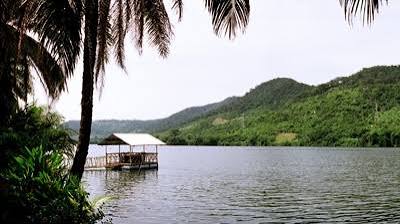
Experts and policymakers from Ghana, Burkina Faso and other international partners have called for long-term, citizen-driven planning to safeguard the Volta Basin, warning that sustainable management of the shared resource is critical to ensuring future water, energy and food security across West Africa.
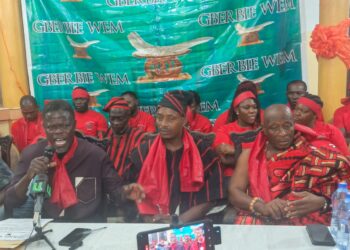
The call was made at the Second National Stakeholder Workshop on the Water-Energy-Food (WEF) Nexus held in Accra under the European Union-funded EPIC Africa Project, which seeks to develop sustainable solutions to climate change, food security and energy access in sub-Saharan Africa.
The three-day workshop brought together stakeholders from Ghana, Burkina Faso, Kenya, the Netherlands, Sweden and Belgium to explore strategies for protecting the Volta Basin while balancing the growing demand for water, energy generation and agricultural production.
Participants included representatives from the Bui Power Authority, National Development Planning Commission, Volta Basin Authority, Water Resources Commission, International Water Management Institute and researchers from Delft University of Technology (TU Delft) in the Netherlands.
Speaking at the workshop, the Coordinator of the EPIC Africa Project and Head of the Water Systems Engineering Section at TU Delft, Dr Edo Abraham, said Africa’s future infrastructure development must be guided by the aspirations and priorities of citizens rather than short-term policy decisions.
He explained that the EPIC Africa Project creates “transition spaces” where communities, policymakers and technical experts jointly develop long-term visions for infrastructure investments in water, agriculture and energy.
“The work of EPIC deals with long-term infrastructural transitions that are sustainable and legitimate—looking towards Agenda 2063, the Africa we want, and scaling that down to the Ghana we want and the Volta Basin we want,” Dr Abraham said.
He noted that the Volta Basin was selected as one of the project’s major case studies because of its strategic importance to several West African countries.
According to him, the basin supports hydropower generation, irrigation, drinking water supply, fisheries, transportation, industrial activities and millions of livelihoods, making its sustainable management essential for regional development.
Dr Abraham added that discussions focused on future investments in hydropower, solar and wind energy, irrigation infrastructure and agricultural systems capable of supporting climate-resilient development.
Research Coordinator for Transition Space at VITO Nexus in Belgium, Dr Yves De Weerdt, said the project combines scientific modelling with public participation to ensure infrastructure decisions reflect local priorities.
He explained that advanced modelling tools help determine where future investments such as solar power plants, battery storage systems and electricity infrastructure should be located while balancing environmental sustainability and economic efficiency.
“Our models allow us to represent the choices and visions of people in Ghana and analyse them spatially to determine where infrastructure should be developed and the trade-offs involved,” he said.
Reverend Professor Eric Ofosu Antwi, the EPIC Africa Project Lead at the University of Energy and Natural Resources (UENR), stressed that Ghana and Burkina Faso bear a significant responsibility in managing the Volta Basin because they account for the largest share of its land area.
He said the workshop provided an opportunity for stakeholders to develop long-term scenarios that would guide future policy decisions and protect the basin for generations to come.
Professor Ofosu Antwi also urged governments to place national development priorities above partisan politics, arguing that sustainable planning requires consistency beyond political cycles.
Meanwhile, the Head of the Renewable Energy Engineering Department at UENR, Dr Felix Amankwah Diawuo, said the project has, over the past four years, created platforms for experts and communities to shape a shared vision for the future of water, energy and food systems.
He disclosed that recommendations from the workshop would be presented to policymakers and governments to support the implementation of the African Union’s Agenda 2063 and promote sustainable development across the Volta Basin.