Ghana is stepping forward to claim a stronger leadership role in Africa’s fast-growing innovation ecosystem as the country pushes through major reforms to modernise its intellectual property (IP) systems and make them more accessible to creators and businesses.
The reforms, which government officials say will remove long-standing bottlenecks and enhance the credibility of Ghana’s IP environment, are part of a national agenda to transform the country into a competitive hub for technology, creative industries, and knowledge-based enterprises.
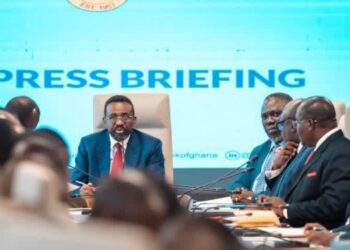
At the 20th Session of the Council of Ministers of the African Regional Intellectual Property Organisation (ARIPO) held in Accra, Ghana signalled its intention not only to improve domestic IP systems but also to shape the future of regional IP governance.
Registrar-General Grace Issahaque, who chairs the ARIPO Administrative Council, said Ghana’s leadership role within ARIPO places the country at the centre of continent-wide reform efforts.
“With this responsibility, Ghana is strategically positioned to influence the modernisation ARIPO seeks to undertake,” she said. “It also means our SMEs, startups and research institutions will be able to tap into ARIPO mechanisms to protect and scale their ideas beyond our borders.”
For Ghana, strengthening IP protection is seen as key to building investor confidence and attracting international firms that depend on secure frameworks for patents, industrial designs, trademarks, and technology transfer.
ARIPO Director-General Bemanya Twebaze emphasised that closer cooperation among member states is essential to ensuring that African innovations gain the protection and commercial pathways needed to compete globally.
“The goal is not just to protect ideas, but to turn them into value that benefits African economies,” he said.
The Director General of the World Intellectual Property Organisation (WIPO), Daren Tang, added that Ghana’s forward-looking approach aligns with global trends where nations with strong IP environments enjoy greater growth in innovation-led sectors.
He reaffirmed WIPO’s commitment to supporting Ghana, noting that the wealth of future economies will increasingly depend on human creativity and technological capability rather than natural resources.
As Ghana assumes a stronger role in shaping regional IP policy, officials say the overarching goal is to create a continent where African ideas can thrive—protected at home and competitive on the global market.