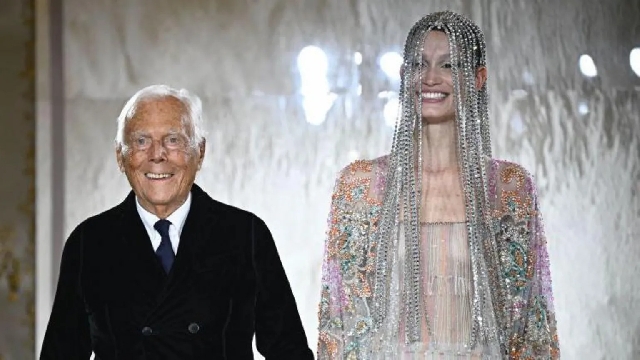
Giorgio Armani, the legendary Italian designer who transformed fashion into a multibillion-euro global enterprise while fiercely maintaining independence from luxury conglomerates, has died aged 91.
Unlike many contemporaries who sold to corporate giants, Armani kept his company privately owned until his final days. His group today generates more than £2 billion annually, spanning fashion, accessories, fragrances, cosmetics, sports sponsorships, music, and luxury hotels.
Industry peers have long pointed to his independence as both unusual and inspirational. British designer Paul Smith praised Armani’s “continuity, his down-to-earth nature, and his staying power in remaining as an unlisted, independent company,” calling him a “huge inspiration.”
Armani’s empire was born out of a radical rethinking of tailoring in the 1970s. His relaxed yet refined suits for men and women revolutionized business attire, making power dressing synonymous with effortless elegance. Hollywood soon embraced his vision, cementing his brand as a red-carpet staple.
But Armani was more than a designer—he was a strategist who understood the cultural and commercial power of lifestyle branding. His early ventures into sports (notably with AC Milan), music, cinema, and hospitality expanded the brand beyond fashion long before it became standard practice in the industry.
Tributes from across the globe acknowledged both his artistry and entrepreneurial foresight. Italian Prime Minister Giorgia Meloni hailed him as “an icon, a tireless worker, a symbol of the best of Italy,” while Hollywood stars such as Russell Crowe and Julia Roberts remembered him for his loyalty and generosity off the runway.
Even late in life, Armani remained actively involved in collections and business decisions, described by his company as “indefatigable to the end.”
His pioneering decision in 2006 to ban underweight models from his runways also underscored his role as a cultural reformer, challenging unhealthy beauty standards that had long dominated the industry.
Armani leaves behind more than a fashion label; he leaves a blueprint for independence in a world dominated by conglomerates, showing that one individual’s vision—if relentlessly pursued—can shape style, culture, and commerce on a global scale.