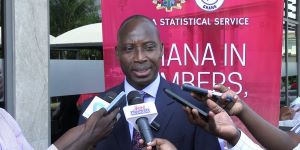
The Institute of Economic Affairs (IEA) has renewed calls for a bold national rethink of Ghana’s natural resource governance, urging a move toward stronger domestic control, greater transparency, and enhanced local participation within the mining industry.
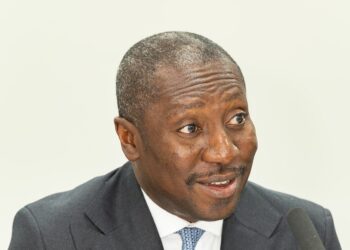
Speaking at a policy seminar on Ghana’s resource management framework, Senior Research Fellow Dr. Eric Oduro Osae argued that despite more than a century of commercial mining, Ghanaians are yet to fully benefit from the nation’s mineral wealth. He stressed that outdated legislation and lopsided incentive arrangements continue to favour multinational mining companies at the expense of national development.
“Ghana now has the technical capacity and skilled professionals to manage its extractive sector differently,” Dr. Osae asserted. “We must transition from outdated economic models that assumed low domestic capacity and adopt policies that reflect our current strengths and aspirations.”
The IEA contends that limited local ownership, constrained participation of Ghanaian businesses, and weak enforcement of value-addition policies have restricted national gains. It also highlighted concerns about the fiscal architecture of the mining sector, noting that substantial state concessions have allowed foreign companies to retain most of the value created.
Citing sector performance data, the Institute observed that although minerals generated $7.1 billion in revenue in 2024, total taxes, royalties and dividends paid amounted to GH¢17.68 billion — far below expectations for a resource-rich economy.
To close the gap and increase Ghana’s share of mineral wealth, Dr. Osae proposed a national strategy that prioritises shared ownership models, improved regulatory oversight, and enhanced transparency in both revenue collection and expenditure.
“We should strengthen local ownership and encourage more Ghanaian equity in mining operations,” he said, calling for a partnership-based approach that balances investor interests with national priorities. “Let us build a transparent system where Ghanaians can see how revenues are generated and used.”
Former Chief Justice Sophia Akuffo echoed the call, demanding a national consensus on resource governance. She recommended convening a national conference to reshape laws and policy direction toward maximizing long-term national value.
“If we do not change the existing regime, the imbalance will persist,” she warned. “We must ensure Ghana commands its rightful share of the wealth beneath its soil.”
The IEA maintains that with proper reforms and a clear national strategy, Ghana can transform mineral wealth into lasting economic empowerment and sustainable development for future generations.