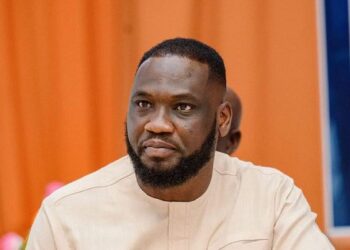
Former Deputy Attorney-General Joseph Kpemka has suggested that the Office of the Special Prosecutor (OSP) also bears some responsibility for failing to secure the Attorney-General’s formal authorisation after its establishment.
According to him, although the Attorney-General’s Department did not provide the required approval under the law, the OSP should have actively pursued the process to ensure its prosecutorial powers were fully regularised.
His comments come amid growing legal debate over the authority of the OSP following a recent High Court ruling that questioned the legal basis of its prosecutions.
Speaking on Eyewitness News, Mr Kpemka said the political atmosphere surrounding the creation of the OSP in 2018 made it difficult for officials to push for tighter oversight or authorisation.
“At the time, if you look at the euphoria that greeted the arrival of Act 959, it was as though anybody who triggered any process at that time appeared as if you were seeking to control or interfere with the work of the Special Prosecutor,” he said.
He acknowledged that the Attorney-General’s office under former Attorney-General Gloria Akuffo did not issue the required authorisation, but maintained that the OSP should not have remained passive.
Mr Kpemka argued that the office could have formally demanded the approval or even sought a court order to compel the Attorney-General to act.
“That is why I am saying that it was incumbent on the implementors of that law, namely the Special Prosecutor, when the office came into existence to write to the AG to demand the authorisation,” he said.
He further argued that the recent High Court ruling was not an interpretation of the Office of the Special Prosecutor Act, 2017 (Act 959), but rather a decision based on whether the law had been properly complied with.
According to him, only the Supreme Court has the authority to provide a definitive interpretation of the Act in constitutional matters.
The controversy has renewed discussion over the balance between the OSP’s independence and the oversight role of the Attorney-General, as legal experts continue to debate the limits of the office’s prosecutorial powers.