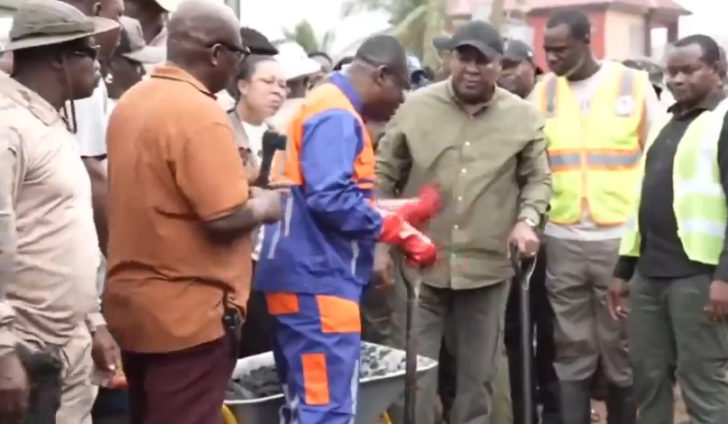
President John Dramani Mahama on Friday joined residents, sanitation workers and government officials in Tse Addo, Accra, to officially launch a nationwide clean-up exercise aimed at restoring communities devastated by recent floods and preventing future disasters.
The President’s participation underscored the government’s commitment to improving environmental sanitation following the heavy rains that claimed about 29 lives, displaced residents and left drains, roads and public spaces choked with refuse and debris across several parts of the country.
The two-day exercise, which began at 6:00 a.m. on Friday, July 10, is being conducted simultaneously in seven flood-affected regions and focuses on clearing waste, desilting drains and improving the flow of stormwater to minimise the risk of flooding.
The first phase of the campaign mobilised Ministries, Departments and Agencies (MDAs), Metropolitan, Municipal and District Assemblies (MMDAs), security services, educational institutions, waste management companies, private organisations and members of the public to undertake coordinated sanitation activities.
Friday’s exercise is expected to continue until 1:00 p.m., with the second phase scheduled for Saturday, July 11, when greater emphasis will be placed on community participation.
Residents, volunteer groups, traditional authorities, security agencies and local assemblies are expected to lead clean-up efforts in their respective communities as part of the nationwide campaign.
The initiative forms part of government’s broader post-flood recovery strategy following the recent torrential rains that caused extensive destruction to homes, businesses and public infrastructure while exposing long-standing sanitation and drainage challenges.
Government has called on all Ghanaians to actively support the exercise, stressing that maintaining clean surroundings and ensuring proper waste disposal are essential to reducing flood risks and safeguarding lives and property.
Officials say the campaign is intended not only to restore flood-affected communities but also to promote a culture of environmental responsibility and collective action against poor sanitation across the country.