President John Dramani Mahama has outlined plans to expand Ghana’s participation in the gold value chain, with a focus on local assaying, refining and other services to ensure the country captures more economic benefits from its gold resources.
The initiative, being pursued through the Ghana Gold Board (GoldBod) and the government’s gold refining policy, is intended to strengthen domestic capacity beyond gold extraction and the export of raw minerals.
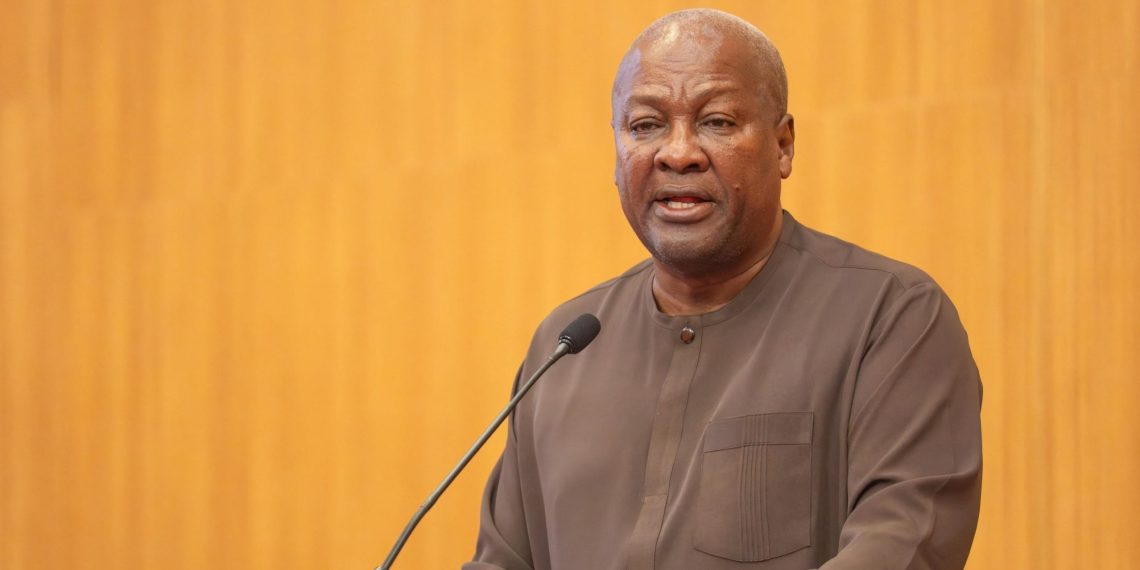
Speaking at the Mining in Motion Conference on Monday, October 19, 2026, President Mahama said the government was working to ensure that more value was generated locally from the country’s gold production.
He explained that developing local expertise and infrastructure for assaying and refining would enable Ghana to retain a greater share of the economic returns from its mineral wealth.
“Through the Ghana Gold Board and our gold refining policy, we are working to retain more value through assaying, refining, and related services,” he said.
Gold assaying, which involves determining the purity and composition of gold, is an important part of the gold trading process. Expanding local capacity in this area, alongside refining, could strengthen Ghana’s role in the wider gold industry.
The policy is also expected to create opportunities for domestic businesses and professionals involved in mineral testing, refining and related technical services.
The government’s approach reflects a broader effort to link Ghana’s mineral resources more closely with domestic industrial development, rather than depending largely on the extraction and export of raw materials.
Through GoldBod and the refining policy, the government aims to build local capacity across more stages of the gold value chain and increase the economic benefits retained within the country.
The extent to which the initiative achieves these objectives will depend on the development of local facilities, technical expertise and the capacity of domestic operators to support the gold industry.