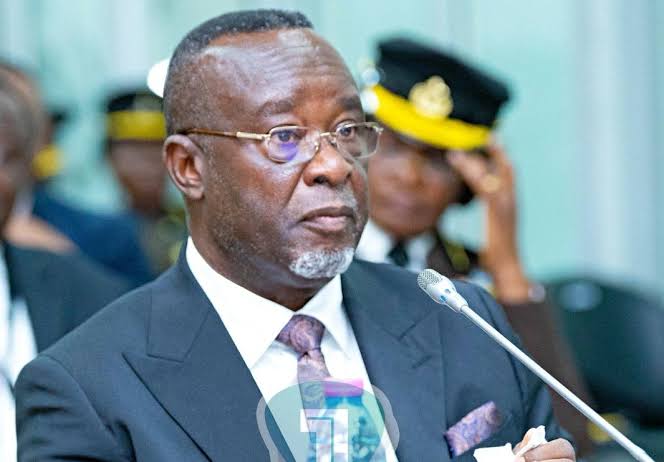
The New Patriotic Party (NPP) has raised concerns over comments attributed to Chief Justice Paul Baffoe-Bonnie, warning that his public statements and engagements could create doubts about the political neutrality of Ghana’s Judiciary.
The party is demanding that the Chief Justice retract what it considers partisan political remarks or resign from office and openly associate himself with the governing National Democratic Congress (NDC).
The NPP’s concerns follow the circulation of a video in which Justice Baffoe-Bonnie is heard comparing the performance of state institutions under the current NDC administration with that of the previous NPP government.
“Sometimes when we hear how well some state organisations are doing now, we wonder what we really have been doing in the past eight years,” the Chief Justice is heard saying in the video.
In a statement issued on September 3, 2026, and signed by NPP General Secretary Justin Kodua Frimpong, the party said such comments were inappropriate for the head of an independent arm of government.
The NPP argued that the Chief Justice occupies a constitutional position that requires political neutrality and strict adherence to the judicial oath.
“A Chief Justice swears a single oath, and it is to the Constitution: to no President, no party and no agenda,” the party stated.
The party also took issue with what it described as the Chief Justice’s repeated presence at events involving political appointees of the current administration.
According to the NPP, such appearances, when combined with comments perceived to favour the governing party, risk creating the impression that the Judiciary is politically aligned.
The party further questioned an alleged commitment by the Chief Justice to do everything possible to ensure the success of President John Dramani Mahama’s agenda.
It said the statement was particularly concerning because some individuals associated with the NPP are currently facing prosecution under the government’s Operation Recover All Loot (ORAL) initiative.
The NPP said public confidence in the Judiciary depended not only on judges delivering impartial decisions but also on ensuring that their public conduct did not create a perception of political favouritism.
The party also alleged that the Judiciary under the current Chief Justice had demonstrated bias against opposition figures, citing what it described as the “extraordinary alacrity” with which vacation warrants had been issued in cases involving NPP members.
The allegations have intensified political debate over the relationship between Ghana’s Judiciary and the executive, particularly at a time when several politically sensitive cases are before the courts.
The NPP therefore called on the Chief Justice to clarify his position and retract the remarks if they were inconsistent with the neutrality expected of the office.
It warned that failure to address the concerns, in its view, could further erode public confidence in the independence and impartiality of the Judiciary.