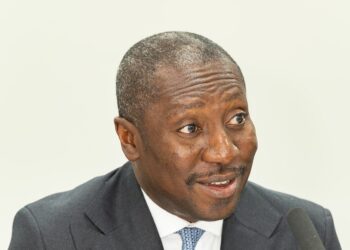
Government will require about $100 million (approximately GH¢800–GH¢900 million) to compensate landowners affected by the Petroleum Hub project, according to the Chief Executive Officer of the Petroleum Hub Development Corporation, Dr. Tony Aubynn.
Speaking to the media after a strategic engagement with Civil Society Organisations, Dr. Aubynn explained that the compensation forms a crucial part of the land acquisition process for the large-scale energy project aimed at positioning Ghana as a regional petroleum and petrochemical hub.
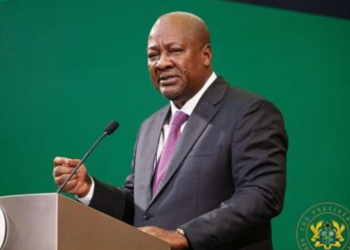
He revealed that the compensation estimate is currently being reviewed following a decision to reduce the total land area for the project from 20,000 acres to 13,000 acres, a directive issued by President John Mahama. The adjustment is expected to affect both the compensation calculations and the broader land development strategy.
Dr. Aubynn noted that although compensation is required under Ghana’s legal framework, government is exploring flexible payment arrangements rather than settling the entire amount at once.
“Because of the reduction in the size of the land, we have to recompute the figures for compensation, but we are looking at around GH¢800 million to GH¢900 million, which is roughly $100 million,” he said.
He added that the Minister of Energy and Green Transition and other government stakeholders are currently working on a model that will allow the compensation process to begin while managing the financial obligations sustainably.
According to Dr. Aubynn, President Mahama has also demanded answers regarding delays in releasing funds for the exercise, prompting renewed efforts by the sector ministry to resolve any bottlenecks.
“You don’t necessarily need to pay everything at once, but there should be a structured model that commits the entity to paying the compensation,” he stated.
The Petroleum Hub project is a flagship initiative intended to attract large-scale investments in oil refining, petrochemicals, storage facilities and related infrastructure, with the compensation of affected landowners regarded as a key step toward unlocking the full implementation of the project.