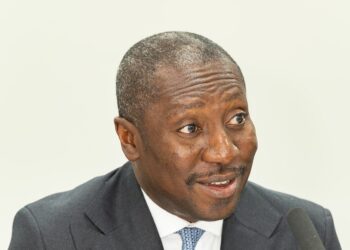
The Economic Advisor to the Vice President, Prof. Sharif Khalid Mahmud, has launched a scathing critique of the Ghana Bar Association (GBA) for its opposition to the recent suspension of Chief Justice Gertrude Torkornoo, accusing the legal body of hypocrisy and selective activism.
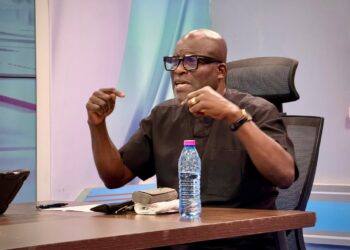
Speaking on The Big Issue on Channel One TV on Saturday, May 3, Prof. Khalid said the GBA’s condemnation of the suspension was both “disappointing” and “appalling,” describing their reaction as uncharacteristically weak and politically biased.
The GBA had earlier issued a statement calling for the immediate reversal of the Chief Justice’s suspension, declaring the move unconstitutional and lacking any legal foundation under the 1992 Constitution. But Prof. Khalid pushed back sharply, accusing the once-revered association of losing its moral authority and failing to remain consistent in its defense of constitutional values.
He lamented what he sees as a fall from grace for the GBA, which he recalled once stood as a pillar of Ghana’s democratic struggle and a beacon of legal accountability. “There was a time when the GBA’s voice echoed as though it were a constitutional arm of government. Today, it barely whispers with credibility,” he stated.
Drawing comparisons with previous national controversies, Prof. Khalid accused the GBA of silence during the removal of former Electoral Commission Chairperson, Charlotte Osei—suggesting political bias in its current activism.
“When Charlotte Osei was controversially removed, did the GBA raise a finger? Did they issue a single statement?” he asked rhetorically, adding that the association’s current assertiveness only emerges when it aligns with certain political narratives.
He further characterised the GBA’s response to the Chief Justice’s suspension as “a vanilla burst of hot air” with no tangible legal grounding, calling into question the association’s relevance in contemporary national discourse.
Prof. Khalid’s comments are likely to deepen the debate around the independence of the judiciary and the politicisation of professional institutions in Ghana. The GBA has yet to respond to the criticism.