
















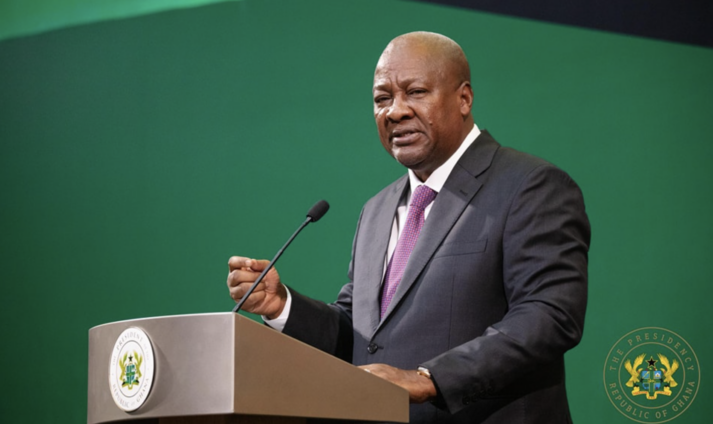
President John Dramani Mahama has issued a stern warning to State-Owned Enterprises (SOEs), declaring that financial mismanagement and underperformance will no longer be tolerated. He announced that struggling SOEs will face tough reforms, including mergers, privatization, or outright closure if they fail to become profitable.
Addressing CEOs of specified entities under the State Interests and Governance Authority (SIGA) on Thursday, March 13, President Mahama emphasized that his administration is committed to resetting and transforming SOEs to ensure efficiency and profitability.
“I will assess you based on your performance. If you cannot keep up with the reset agenda, you may be asked to step aside,” he stated firmly. “The era of impunity, mediocrity, and financial recklessness must end today.”
His remarks follow Finance Minister Cassiel Ato Forson’s recent disclosure that most SOEs are in financial distress and have failed to generate profits. According to President Mahama, this meeting was not just a dialogue but a direct call to action for SOE executives to demonstrate bold leadership, accountability, and commitment to excellence.
The President referenced the 2023 State Ownership Report by SIGA, which exposed inefficiencies within SOEs, noting that many entities have long suffered from wasteful spending, conflicts of interest, and misalignment with national priorities.
“SOEs have too often been used for personal enrichment rather than national development. Some of these entities continue to drain public resources with excessive expenditures and bloated budgets while depending on government bailouts as if they are entitled to them,” he lamented.
President Mahama reiterated that his 2024 campaign promises and his 120-day social contract with Ghanaians were not mere rhetoric but a commitment to ensuring state enterprises become viable and self-sustaining.
With this directive, SOE executives now face increased scrutiny and expectations, as the government moves to implement stringent measures to revive state enterprises and eliminate financial inefficiencies.





