
















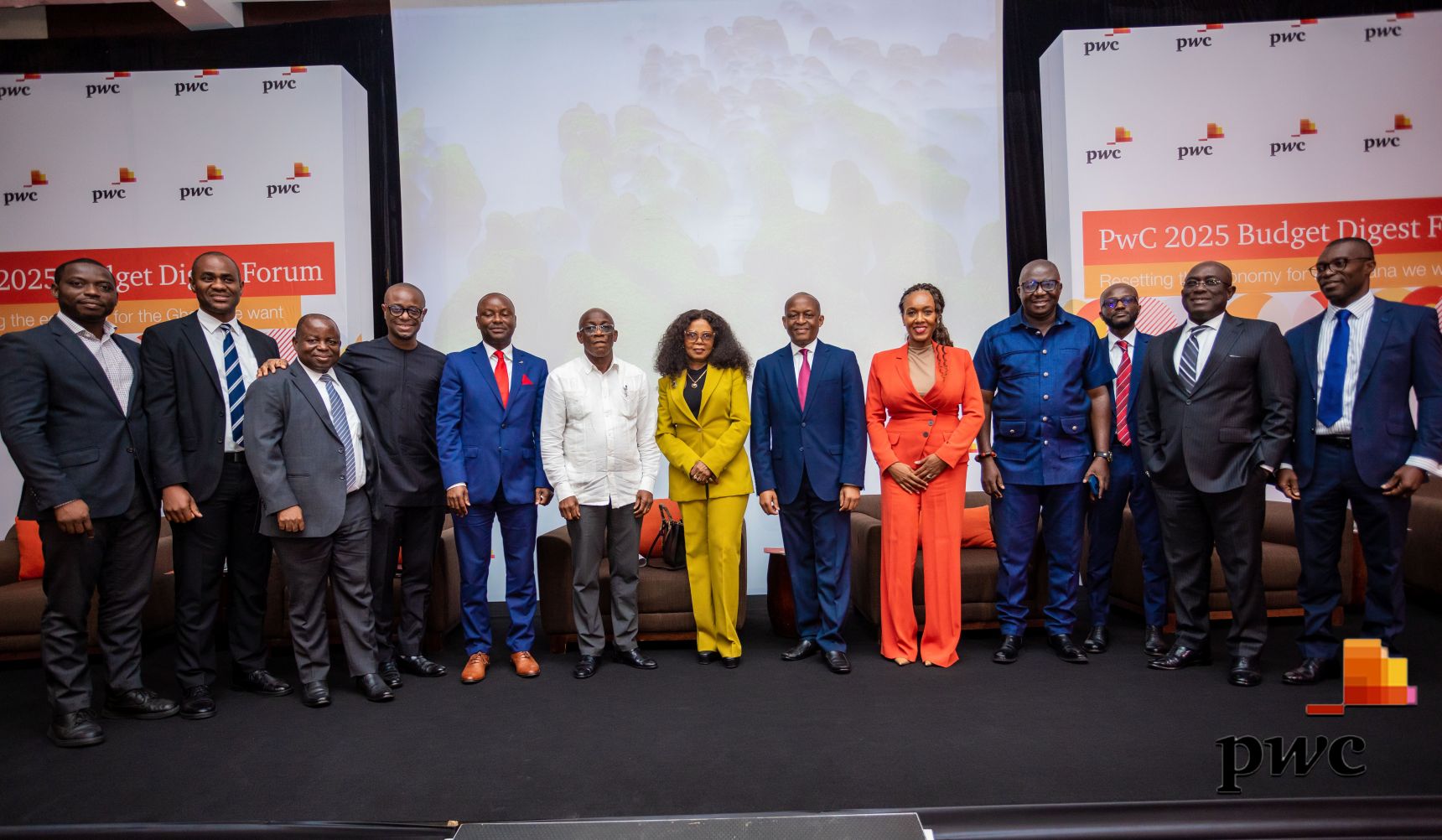
PricewaterhouseCoopers (PwC) Ghana has emphasized the need for the government to shift its focus from policy formulation to effective implementation in order to create a thriving business environment and accelerate private sector growth.
Speaking at the PwC Ghana 2025 Budget Digest in Accra, the firm’s Country Senior Partner, Mr. Vish Ashiagbor, acknowledged that while the 2025 budget appears business-friendly, its impact will depend on how well the policies are executed.
“The private sector has always been considered the engine of growth, but policy implementation challenges have hindered its full potential,” Mr. Ashiagbor noted.
One of the key concerns raised was the impact of the Growth and Sustainability Levy on the mining sector. Mr. Ashiagbor urged for more dialogue between industry players and the government to address concerns about the levy’s long-term impact on investment returns.
“The mining sector argues that an increase in the levy and extension of its tenure will distort their investment plans, while the government faces challenges in balancing revenue and expenditure. Dialogue is crucial to finding a middle ground,” he explained.
On agriculture, Mr. Ashiagbor highlighted the relatively small budget allocation to the sector but acknowledged that indirect investments in infrastructure and agri-processing zones could still support growth.
“The government does not necessarily have to invest directly in agriculture, but if they create the right environment for the private sector to thrive, it will be a positive step,” he stated.
Presidential Advisor on the Economy, Mr. Seth Tekper, reassured stakeholders of the government’s commitment to supporting local enterprises, particularly through the Exim Bank, to enhance value addition and export growth.
“We are actively working on increasing local value addition to reduce our reliance on imports and retain more value within the domestic economy,” he said.
Additionally, Presidential Advisor on the 24-hour Economy policy, Mr. Goosie Tanoh, stressed that the government is restructuring the economy to move away from import dependency. He pointed to the Accelerated Export Development Programme as a key initiative to address agricultural challenges and create sustainable jobs.
The PwC Post-Budget Analysis serves as a platform to evaluate the government’s fiscal policies and their potential implications for businesses and the general public. This year’s discussion reinforced the importance of policy execution in achieving economic transformation.






