
















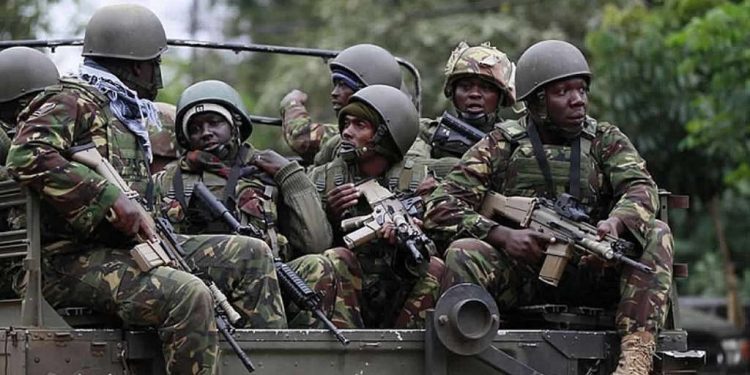
Ghana’s youthful population is increasingly losing faith in the country’s democratic leadership, with a growing number signaling readiness to endorse military intervention should elected officials abuse their power, according to the 2024 Afrobarometer survey.
The latest findings from the Centre for Democratic Development-Ghana (CDD-Ghana) reveal a startling shift in public sentiment: 51% of Ghanaians now support a military takeover under circumstances of governance failure — up sharply from 40% just two years ago.
Youth dissatisfaction is driving the trend. The survey shows 52% of Ghanaians aged 18–25 and 56% aged 26–35 back the idea of military intervention if democratic leaders betray public trust. The findings, presented during a regional dissemination event in Kumasi, paint a worrying picture of growing disillusionment among the next generation.
Gender dynamics also revealed a gap, with 53% of men and 48% of women expressing willingness to back military action in such cases.
Ms. Mavis Zupork Dome, Senior Research Analyst at CDD-Ghana, presented the data, noting that the nation remains divided even after a hypothetical military takeover: while 41% advocate for a slow and structured return to civilian rule, 38% want an immediate transition, and a troubling 14% would tolerate indefinite military rule if it “served national interests.”
Mr. Jonathan Donkor, Technical Advisor at GIZ, emphasized the importance of strengthening democratic institutions and enhancing civic engagement to rebuild public trust.
“Policies are most effective when citizens’ voices are at the center of governance,” he remarked, adding that data-driven insights like Afrobarometer are crucial for bridging the widening gap between citizens and their leaders.
The findings, supported by Germany’s Federal Ministry for Economic Cooperation and Development (BMZ), the European Union, Switzerland’s SECO, and implemented by GIZ, highlight an urgent call for renewed efforts toward transparency, accountability, and youth engagement to preserve Ghana’s democratic stability.





