
















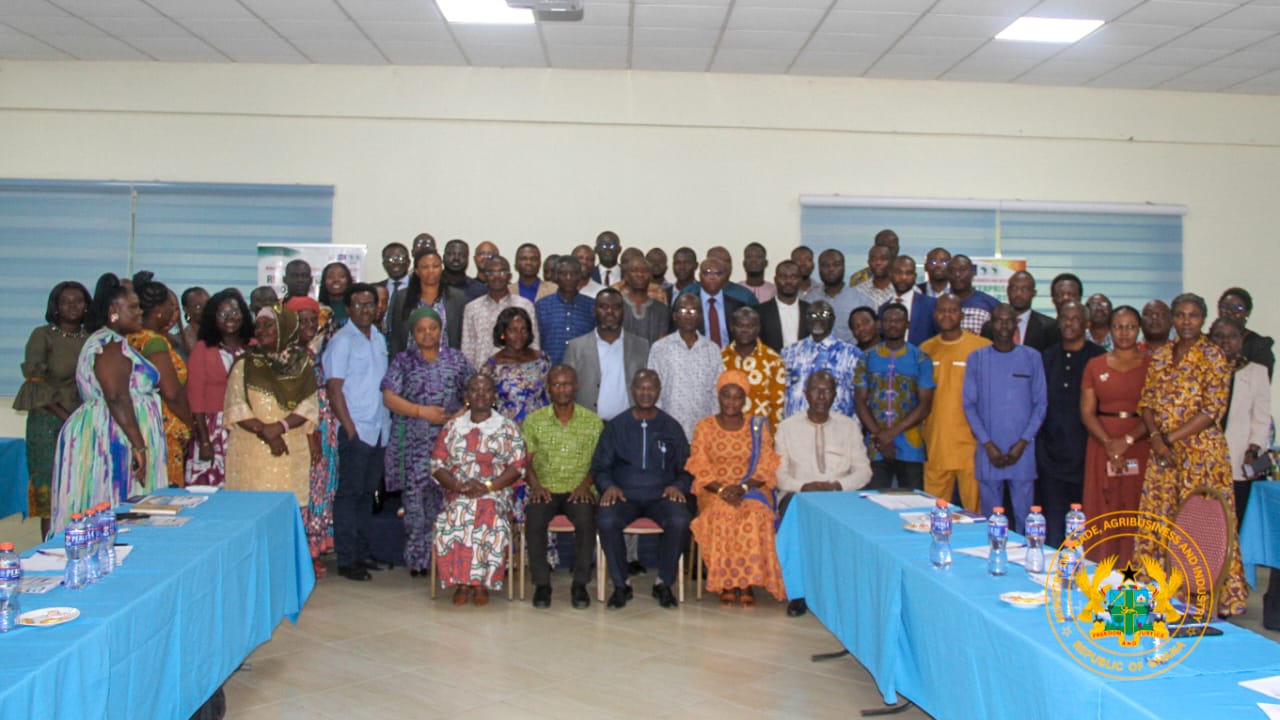
After more than 30 years of implementation, Ghana’s Rural Enterprises Programme (REP) has officially drawn its third and final phase to a close — leaving behind a transformed micro, small, and medium enterprise (MSME) landscape that is set to anchor the country’s next wave of industrialisation.
Speaking at a stakeholder workshop in Accra on Monday, Mrs. Elizabeth Ofosu-Adjare, Minister of Trade, Agribusiness and Industry, said the end of the project does not mark a conclusion but rather a transition into a nationally-owned industrial transformation agenda.
“This workshop marks the beginning of a new chapter — moving from project-driven interventions to institutionalised, nationally-owned systems that can deliver long-lasting benefits,” she said in remarks delivered on her behalf.
Over its three decades of implementation, REP — supported by the African Development Bank (AfDB) and the International Fund for Agricultural Development (IFAD) — has catalysed critical reforms and institutions that continue to shape Ghana’s enterprise ecosystem.
Among its achievements, the programme facilitated the development of Ghana’s MSME Policy, supported the transformation of the National Board for Small Scale Industries into the Ghana Enterprises Agency, and repositioned the GRATIS Foundation as a centre of excellence for technical innovation. State-of-the-art CNC machines were installed, workshops retooled, and a modern Knowledge Centre established to advance industrial skills.
The programme also institutionalised Regional Committees on MSME Promotion and District SME Sub-Committees, strengthening coordination between local assemblies and regional councils.
Mrs. Ofosu-Adjare noted that beyond infrastructure and policy reforms, the greatest legacy of REP is visible in the thousands of rural entrepreneurs who have been empowered to start profitable businesses, generate jobs, and improve livelihoods.
She expressed gratitude to AfDB and IFAD for their long-term partnership, stressing that the collaboration had been crucial to achieving sustainable outcomes.
“As we close this chapter, let us sustain REP’s legacy and build upon its achievements. Together, with our development partners, we will unlock Ghana’s rural potential and drive inclusive, resilient, and sustainable industrialisation,” she added.
The conclusion of REP’s third phase sets the stage for Ghana to consolidate its gains and accelerate industrial transformation at the district level, with MSMEs at the heart of inclusive growth.






