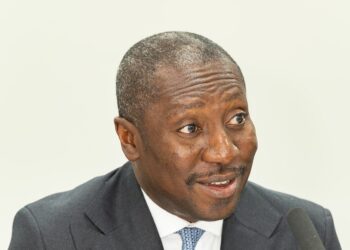
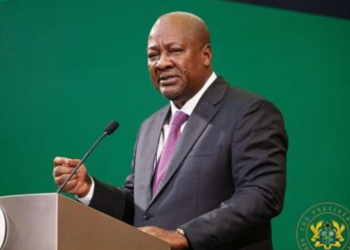
Ghana’s Minister for Communication, Digital Technology and Innovation, Samuel Nartey George, is taking a firm stance on foreign digital operators, calling for Starlink — the satellite internet service launched by Elon Musk’s SpaceX — to establish a physical presence in Ghana.
Despite having secured approval from the National Communications Authority (NCA) to operate in the country, Starlink has yet to set up an official office in Accra. According to Mr. George, this lack of local presence poses a serious challenge to effective regulation and consumer support.
“It’s a matter of sovereignty and responsibility,” Mr. George stated during an interview with TV3. “We cannot continue to permit global tech giants to provide services in Ghana without being locally accountable. If they want to do business here, they must have an office here.”
Mr. George also took aim at the NCA, critiquing the regulatory body for failing to make a physical presence a precondition for licensing Starlink. He questioned how Ghanaian authorities could promptly resolve issues or respond to emergencies when there is no local representative available.
“Imagine a customer dispute or a data security concern — do we send an email to someone in the U.S. and wait three weeks for a response?” he asked. “That is not acceptable, especially when Ghanaian mobile network operators can be called into a meeting within hours.”
The Minister argued that requiring a local office would not only improve regulatory responsiveness but also enhance consumer protection, facilitate infrastructure collaboration, and create job opportunities for Ghanaians.
Starlink officially launched in Ghana in August 2024 through its local entity, SpaceX Starlink GH LTD. The service has been hailed for its high-speed satellite internet — often exceeding 100 Mbps — and is viewed as a potential game-changer for underserved rural areas.
However, as the digital landscape evolves and foreign companies enter the Ghanaian market, Mr. George is championing a broader conversation about corporate responsibility and digital sovereignty.
“This isn’t about pushing companies away — it’s about creating a level playing field and safeguarding our national interest,” he noted. “We welcome innovation, but it must come with accountability.”
Starlink, operated globally by SpaceX, uses a growing constellation of low-Earth orbit satellites to deliver broadband internet in regions lacking reliable connectivity. While its expansion into Africa is seen as a technological leap forward, Ghana’s demand for a stronger regulatory framework may set a precedent for how such services are engaged on the continent.