
















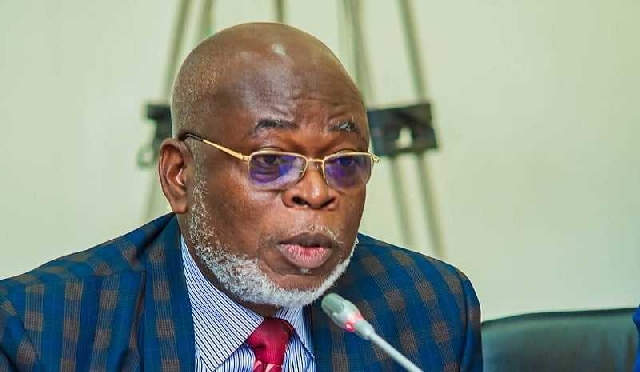
Ghana risks enduring ongoing economic losses and deepening public distrust if it fails to hold public officials accountable for financial mismanagement, warns Dr. James Klutse Avedzi, Acting Director-General of the Securities and Exchange Commission (SEC).
In a candid interview on The Class Morning Show with Kwame Dwomoh-Agyemang, Dr. Avedzi — a former chair of Parliament’s Public Accounts Committee (PAC) — criticized what he described as a systemic failure to enforce accountability within public institutions.
Despite regular reports by the Auditor-General uncovering widespread financial irregularities across government agencies, Dr. Avedzi noted that calls for prosecution, even after parliamentary endorsement, are routinely ignored by the Attorney General’s Department.
“The lack of follow-through on PAC recommendations has created a culture where public officials can misuse state funds without consequence,” he stated. “We have institutional structures, but we are failing to act on what they reveal.”
Call for Prosecution and Deterrence
Dr. Avedzi stressed that the absence of prosecutions perpetuates impunity. He warned that unless the government starts enforcing consequences — including recovering stolen funds and jailing offenders — the country will continue to hemorrhage resources.
“If there are no real consequences, the cycle will repeat. People come before the PAC and lie, knowing nothing will come of it,” he added.
Economic Reform and Resource Management
Shifting the conversation beyond accountability, Dr. Avedzi turned attention to Ghana’s economic outlook, linking financial discipline to long-term independence from international bailouts such as those from the International Monetary Fund (IMF).
He argued that while taxation remains important, the efficient management of public revenue — coupled with the strategic use of Ghana’s abundant natural resources — will determine the country’s financial stability.
“Citizens will pay taxes if they see value. But they need evidence that government is putting their money to good use,” he said.
He also highlighted the critical need for renegotiating resource deals, especially in mineral-rich areas like Tarkwa, Obuasi, and Akwatia, where local communities remain underdeveloped despite hosting lucrative extractive industries.
“In some agreements, foreign firms take home 80% of the wealth. That imbalance must be corrected to ensure Ghanaians truly benefit from their natural resources,” Dr. Avedzi asserted.
Commending Progress but Urging More
Dr. Avedzi praised recent government initiatives, including the establishment of the Gold Board, which aims to regulate gold exports and prioritize Ghanaian ownership of mining licenses. He acknowledged these steps as promising but emphasized that real change will only come with strong enforcement and a clear political will to combat corruption.
“The pieces are there — reports, committees, new boards — but we must act. Without enforcement, they’re just paperwork,” he concluded.






