
















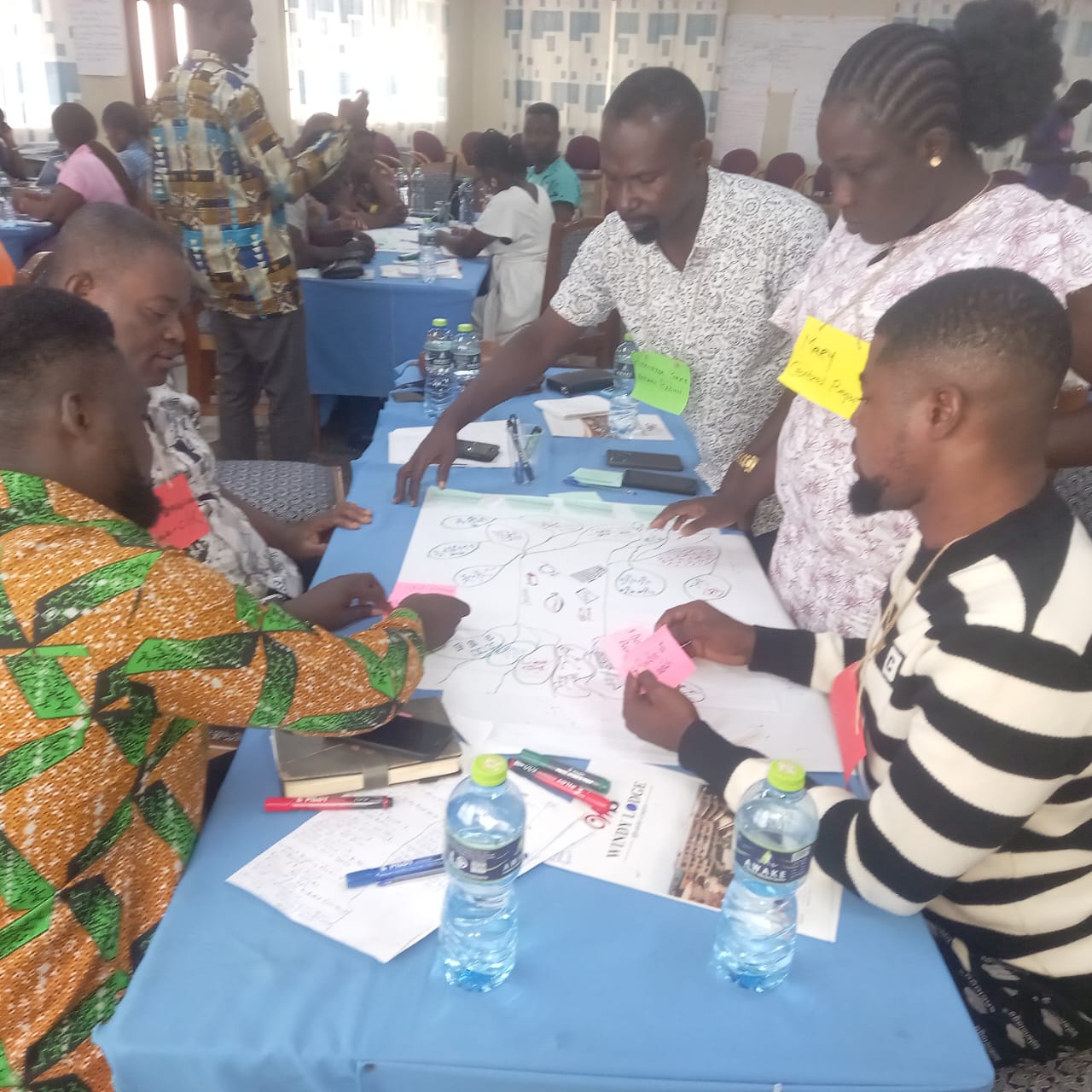
Participants of the maiden Small-Scale Fisheries Academy (SSF Academy) workshop have pledged to take a more active role in promoting compliance with Ghana’s fisheries laws and supporting efforts to rebuild the country’s declining fish stocks.
The 30 participants, comprising men and women from fishing communities across Ghana’s four coastal regions, said they would serve as community facilitators to help fishers better understand the provisions of the Fisheries and Aquaculture Act, 2025 (Act 1146), and encourage responsible fishing practices at landing beaches.
In a communique issued at the end of the workshop held in Winneba, the participants announced plans to establish monthly dialogue platforms involving chief fishermen, canoe owners, fishers and other industry players to identify local challenges and develop solutions.
They said the platforms would also provide opportunities for fishing communities to engage with the Ministry of Fisheries and Aquaculture Development and the Fisheries Commission on concerns affecting their livelihoods and contribute to future policy decisions.
The participants noted that community involvement was critical to achieving sustainable fisheries management, arguing that local knowledge and experience must be integrated into national efforts to protect marine resources.
The SSF Academy forms part of a one-year partnership between non-profit organisation Mundus maris asbl and the Canoe and Fishing Gear Owners Association of Ghana (CaFGOAG LBG), aimed at empowering fishing communities to develop locally driven initiatives that support fisheries restoration and protect the livelihoods of fishers.
According to the participants, Ghana’s fisheries sector continues to face serious challenges due to years of illegal fishing practices, overexploitation and declining marine resources.
They noted that the depletion of fish stocks has affected not only artisanal fishers but also semi-industrial and industrial fishing operations, contributing to Ghana’s increasing dependence on imported fish.
They cited estimates from the Fisheries Commission indicating that the country imports about 80,000 tonnes of fish annually to meet domestic demand.
The participants acknowledged ongoing interventions by the government and the Fisheries Commission, including campaigns against illegal, unreported and unregulated fishing (IUU fishing), the establishment of Marine Protected Areas and efforts to promote fisheries co-management.
However, they said stronger collaboration between state institutions, fishing communities and other stakeholders was needed to accelerate the recovery of Ghana’s marine resources.
They described the SSF Academy as a platform that would strengthen cooperation among actors in the fisheries sector by creating space for dialogue, knowledge-sharing and the development of practical solutions to challenges confronting coastal communities.
The participants further highlighted that the Fisheries and Aquaculture Act, 2025 (Act 1146), which provides a legal framework for fisheries co-management, offers an opportunity to transform the relationship between government regulators and fishing communities.
They said the partnership between Mundus maris and CaFGOAG would help translate the law into practical action by strengthening community institutions, improving awareness of regulations and encouraging voluntary compliance among fishers.
The participants called for continued collaboration with universities, civil society organisations, traditional authorities, development partners and other stakeholders committed to securing the future of Ghana’s small-scale fisheries.






