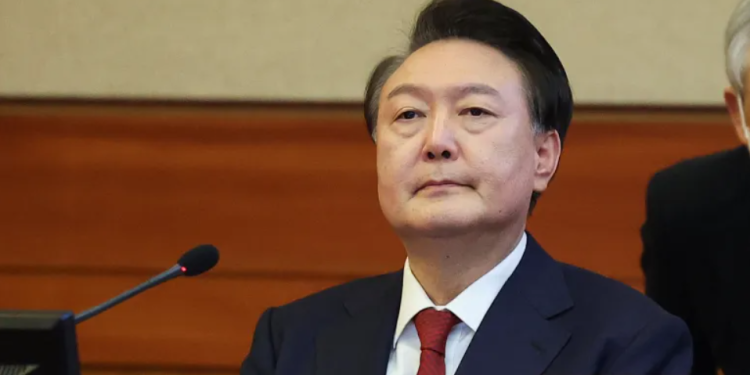
South Korea’s Constitutional Court has officially removed President Yoon Suk-yeol from office, following a unanimous ruling that his declaration of martial law late last year was unconstitutional and an overreach of presidential power.
In a landmark decision on Friday, acting Chief Justice Moon Hyung-bae announced that Yoon’s actions, including deploying military and police forces to the streets of Seoul in December, were unlawful and violated the Constitution. The court’s verdict concluded that the president had overstepped his authority in an attempt to suppress political opposition and infringe on citizens’ rights.
“The defendant mobilised military and police forces to dismantle the authority of constitutional institutions and infringed upon the fundamental rights of the people,” Justice Moon said. “In doing so, he abandoned his constitutional duty and gravely betrayed the trust of the Korean people.”
Yoon’s controversial declaration of martial law came on December 3, 2024, citing concerns over alleged anti-State and North Korean elements infiltrating the government. However, his decision to send forces to shut down the National Assembly and detain political rivals sparked intense scrutiny. Senior military and police officials testified that Yoon’s orders were aimed at preventing the assembly from voting to lift the martial law, further complicating his defense.
The National Assembly had voted to impeach Yoon on December 14, 2024, but it required the Constitutional Court’s approval to formally remove him from office. The court’s ruling means that South Korea will hold a new presidential election within 60 days, with Acting President Han Duck-soo taking charge in the interim.
Outside the courthouse, the ruling sparked divided reactions. Supporters of Yoon, particularly older protesters, expressed frustration with the decision, some chanting accusations of “rigged election” and “corruption.” In contrast, critics of the president gathered in celebration, hailing the ruling as a victory for constitutional democracy.
The case has ignited a national debate, with protests and rallies intensifying on both sides since Yoon’s impeachment. The court’s decision comes after a fiercely contested trial, which saw an overwhelming demand for public access—more than 96,000 people applied for just 20 available observation seats, underscoring the high level of public interest in the proceedings.
The verdict is likely to have long-lasting implications for South Korea’s political landscape, raising questions about the limits of executive power and the role of the military in political disputes. With a presidential election now imminent, the nation faces a critical moment in its democratic journey.