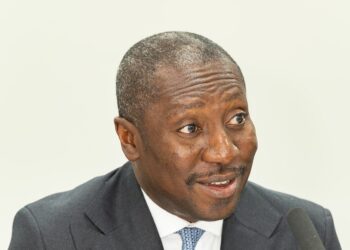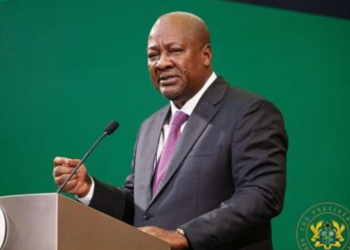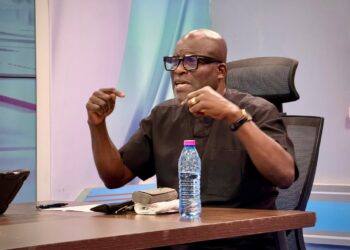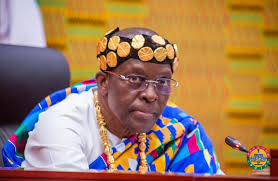
Speaker of Parliament Rt. Hon. Alban Sumana Kingsford Bagbin has called for the newly developed 24-Hour Economy Policy to be formally laid before Parliament after its launch, to allow for national debate and cross-party ownership of the initiative.
Speaking in Accra on Thursday following a presentation of the policy document by Mr. Augustus Obuadum Tanoh, Presidential Advisor at the 24-Hour Economy Secretariat, the Speaker stressed the importance of legislative scrutiny and collective endorsement.
“This policy must not remain a partisan initiative. Once launched, it should be presented to Parliament to secure the buy-in of all arms of government,” Bagbin stated. “We’ve seen this work with Vision 2020 and Free SHS. National programmes thrive better when given parliamentary legitimacy.”
The 24-Hour Economy Policy, a flagship economic programme of President John Dramani Mahama’s administration, is set to be officially launched on Wednesday, July 2, 2025. The policy aims to transform Ghana’s production capacity, stimulate exports, boost employment, and modernise economic systems by encouraging round-the-clock business activity.
Mr. Tanoh, while presenting the policy framework, explained that the programme is structured around three strategic pillars:
- Production Transformation,
- Supply Chain and Market Efficiency, and
- Human Capital Development.
These are further broken down into eight sub-programmes such as Grow 24, Make 24, Go Ghana, Show Ghana, Digital Technology, and Aspire 24—the latter designed to shift work culture and enhance productivity among Ghanaian workers.
The Speaker commended the structure of the policy but insisted it must be nationalised through bipartisan dialogue and transparent institutional support.
“We need to remove political, ethnic and religious labels from this initiative. Let’s treat it as a national development plan and give it the framework needed to ensure continuity, regardless of which party is in power,” he said.
The 24-Hour Economy concept was a central pillar of the NDC’s 2024 campaign, touted as a means to unlock Ghana’s untapped economic potential and absorb the growing youthful workforce into productive ventures.
With expectations high ahead of the launch, Mr. Bagbin’s call adds pressure on the government to institutionalise the policy through Parliament, potentially making it one of the few economic programmes in Ghana’s recent history to enjoy full legislative support from the outset.