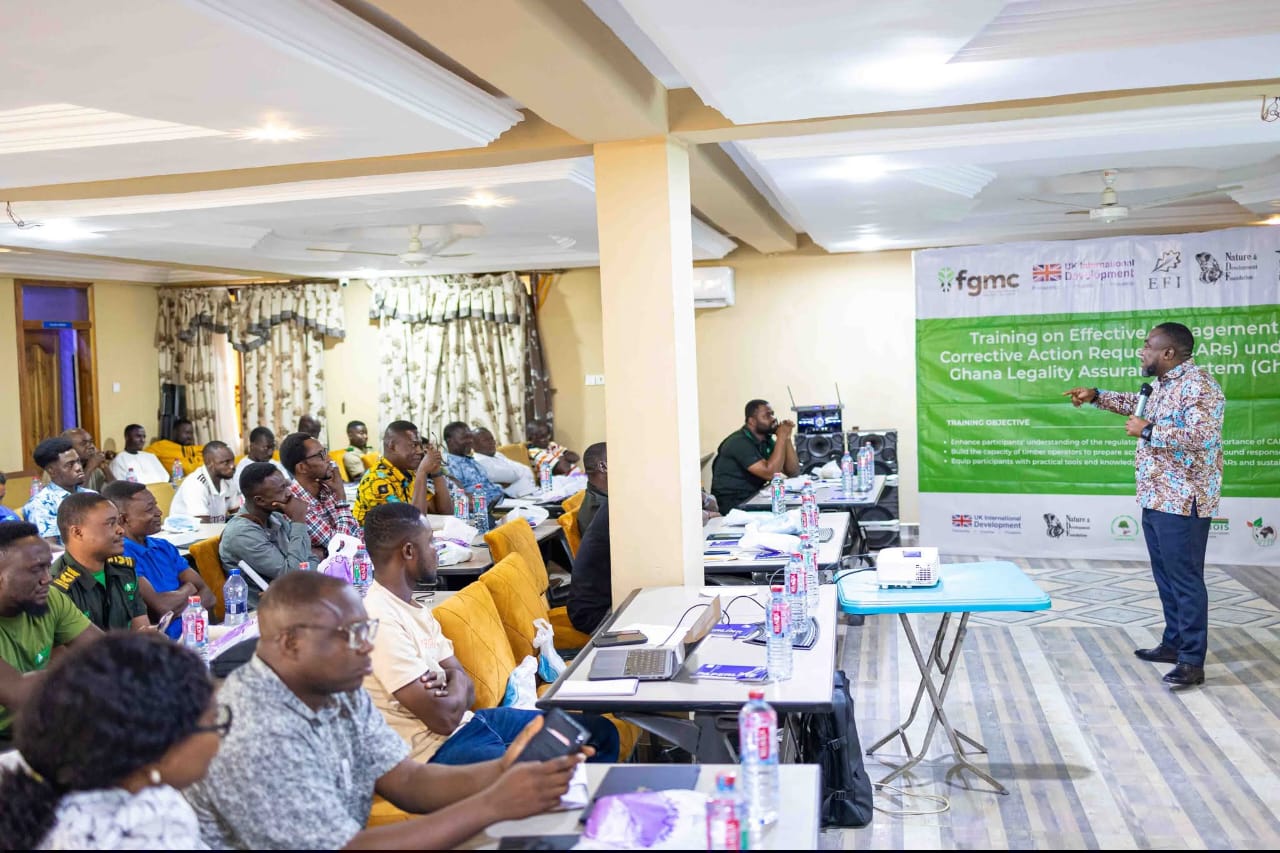
A capacity-building workshop has been held to equip stakeholders in Ghana’s timber industry with the knowledge and skills needed to improve compliance with forestry regulations and promote sustainable forest management.
The programme was organised by the Forest Governance, Markets and Climate (FGMC) Programme in partnership with the UK Government, as part of broader efforts to strengthen forest governance and reduce illegal logging, mining, and deforestation across Ghana and other partner countries including Liberia and Cameroon.
Participants at the workshop were drawn from key timber-producing and processing areas such as Adansi Asokwa, Obuasi, New Adubiase, Dunkwa-on-Offin, Assin Fosu, and Twifo Praso.
Speaking at the event, Senior Project Manager at the Nature and Development Foundation, Mrs Margaret Appiah, said improving industry knowledge on regulatory compliance remains essential for ensuring accountability and sustainable use of forest resources. She noted that many operators still struggle with documentation and regulatory requirements, making continuous training critical.
She stressed the importance of collaboration between regulators and industry players to balance economic activity with environmental protection and ensure forests are preserved for future generations.
The Manager of the Timber Verification Department, Dr Frank Ankomah, also highlighted ongoing challenges within the sector, noting that some companies fail to meet international standards due to weaknesses in their operational systems.
He warned that such compliance gaps often delay or prevent the export of timber products to both local and international markets, urging operators to strictly adhere to legal requirements to remain competitive.
Dr Ankomah added that companies that comply fully with regulations are more likely to access broader market opportunities and improve their business prospects.
Participants welcomed the training, expressing gratitude to the organisers and development partners and pledging to apply the lessons learned to improve compliance, sustainability, and efficiency in their operations.