
















The Volta Region is intensifying efforts to transform agriculture and improve food production through the construction of farmer service centres, expanded access to farm inputs and support for poultry production.
Two ultra-modern farmer service centres are currently being constructed in the Adaklu and Keta districts as part of measures to bring modern agricultural services closer to farmers.
The centres are expected to provide farmers with technical support, modern farming equipment and training in improved agronomic practices to help increase productivity and strengthen food security.
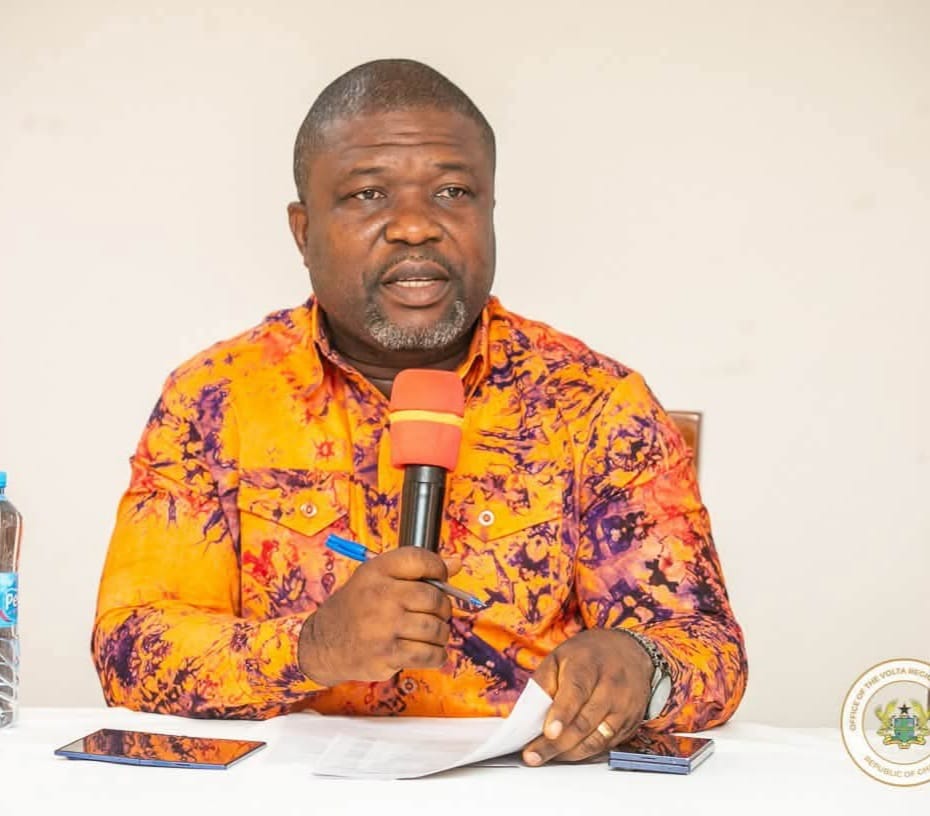
Volta Regional Minister, James Gunu, disclosed this at a meeting of the Volta Regional Coordinating Council in Ho, where he outlined a series of interventions aimed at unlocking the region’s agricultural potential.
He said additional farmer service centres would be established across the region, stressing that the government’s long-term objective was to make scientific and modern farming practices accessible to farmers at the grassroots.
According to Mr Gunu, the region had also distributed 1,000 bags of fertiliser to every district and municipality for the current farming season.
The fertiliser distribution, he said, was intended to support smallholder farmers, improve crop yields and contribute to efforts to enhance food security.
The region has also received a major boost in poultry production under the government’s National Nkoko Nkitinkiti initiative.
Mr Gunu disclosed that 180,000 live birds had been delivered to the Volta Region and distributed among the various districts and municipalities.
He said the programme was aimed at strengthening the local poultry value chain, increasing domestic production of meat and eggs and creating economic opportunities for rural communities.
Protecting farmers’ investments
The Regional Minister further highlighted measures to protect farmers from the financial losses associated with unsold produce and post-harvest losses.
He said the government had released GH¢300 million to the National Buffer Stock Company to enable it to purchase surplus agricultural produce directly from farmers.
The intervention, he explained, would provide a ready market for farmers while helping to stabilise prices and reduce the amount of produce that goes to waste.
Mr Gunu called for greater collaboration among stakeholders to maximise the region’s agricultural potential, create jobs for young people and contribute to national economic growth.
Meanwhile, the Acting Volta Regional Director of Education, Marian Jemima Adzroe, said the region was also implementing targeted measures to address learning gaps, particularly in low-performing schools.
She said the Directorate was strengthening instructional delivery with emphasis on English Language, Mathematics, Science and Social Studies.
Mrs Adzroe also said efforts were being made to ensure gender-inclusive educational outcomes, with interventions designed to maintain the strong academic performance of girls while improving boys’ participation and achievement.
The combined interventions in agriculture and education, officials said, are expected to strengthen human capital and economic opportunities while supporting the region’s broader development agenda.






