The Volta River Authority (VRA) has called for stronger engineering oversight, modern infrastructure and sustained investment to address Ghana’s electricity reliability challenges and support the country’s industrial ambitions.
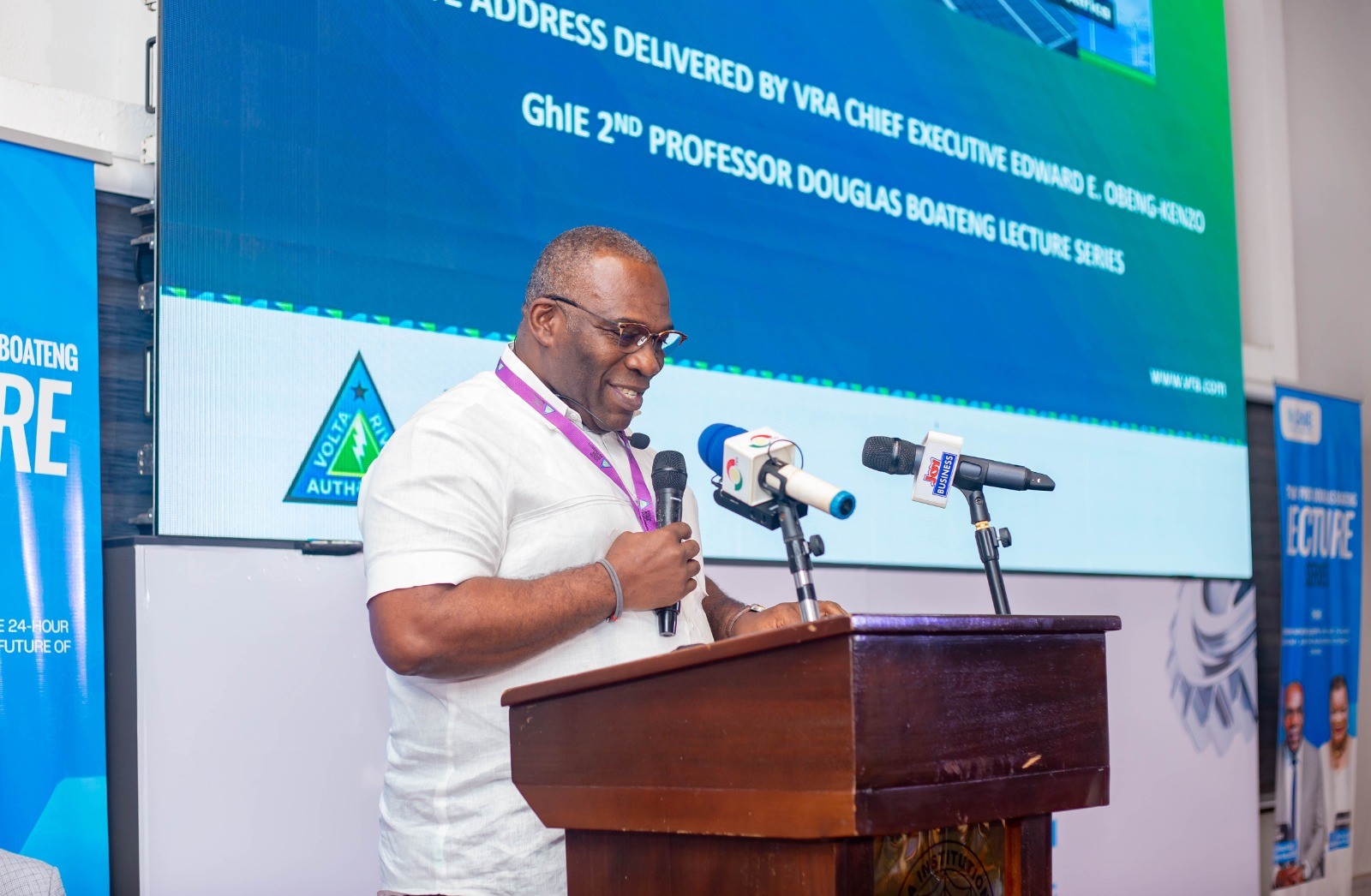
The Authority’s Chief Executive, Mr Edward Obeng-Kenzo, said the success of the 24-Hour Economy and Accelerated Export Development Programme would depend heavily on the availability of reliable, affordable and sustainable power.
He made the call at the Second Ghana Institution of Engineering (GhIE)-Professor Douglas Boateng Lecture Series in Accra on Monday.
The event, held under the theme “Power Never Sleeps: VRA, the 24-Hour Economy and the Industrial Future of Ghana,” brought together engineers, policymakers, academics and industry leaders to examine the role of engineering in national development.
Mr Obeng-Kenzo said Ghana’s industrial future required an electricity system that was not only dependable but also cleaner, smarter and capable of adapting to changing demands.
He said VRA was therefore modernising its generation facilities, expanding investments in renewable energy and introducing smart technologies as part of efforts to strengthen power supply.
“We recognise that tomorrow’s industries will require power systems that are not only reliable but cleaner, smarter and more adaptable,” he said.
Mr Obeng-Kenzo said the 24-Hour Economy offered Ghana an opportunity to accelerate industrial growth, create jobs, expand exports and strengthen national prosperity.
However, he stressed that such ambitions could not be achieved without a dependable energy system.
He urged the Ghana Institution of Engineering (GhIE) to position itself as a national engineering think tank capable of providing evidence-based recommendations on energy sector reforms and grid modernisation.
The VRA Chief Executive also called on the institution to support the enforcement of engineering standards across the country’s electricity generation, transmission and distribution infrastructure.
He further proposed national technical audits of electricity distribution systems to identify weaknesses and accelerate the replacement of obsolete and inefficient infrastructure.
Such interventions, he said, could significantly reduce Ghana’s persistent power reliability challenges.
Mr Obeng-Kenzo said the country’s commitment to powering economic transformation must remain constant.
“Just as the Volta River continues to flow day and night, season after season, so too must our commitment to powering Ghana’s development remain unwavering. People may rest, but progress cannot sleep; neither can power,” he said.
Dr Enyonam Kpekpena, Executive Director of GhIE, said the lecture series was designed to explore how VRA’s experience, infrastructure and strategic position could contribute to Ghana’s transition into a more competitive industrial economy.
The forum formed part of ongoing efforts to promote engineering-based solutions to infrastructure challenges and support sustainable national development.