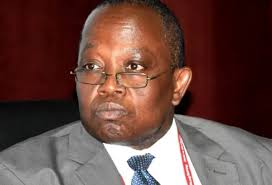
Former Auditor-General Daniel Yao Domelevo has raised concerns over what he describes as misplaced priorities by the government, criticizing its decision to invest in a Hajj Village while Ghana faces serious economic challenges.
Domelevo’s criticism comes at a time when the country is still dealing with the financial aftermath of the National Cathedral project, which saw an expenditure of $58 million with little progress to show. He argues that allocating resources to a religious facility, instead of projects that would directly stimulate economic growth, reflects poor governance.
Despite government assurances that the Hajj Village will not involve taxpayer money, Domelevo remains skeptical. He points out that the Ghana Airports Company Limited (GACL), which is overseeing the project, is a state-owned enterprise. Given that its revenue ultimately belongs to the government, he suggests that public funds could still be indirectly used for the project.
“If the government is a major shareholder in GACL, then it is difficult to believe that no public funds are involved,” he argued.
Domelevo contrasted Ghana’s priorities with Ethiopia’s, highlighting how the East African nation, despite having a significant Muslim population, has chosen to invest in projects with broader economic benefits. Ethiopia recently developed the five-star Skylight Hotel with over 1,000 rooms to support passenger transit and boost tourism revenue while also expanding its airport infrastructure.
In contrast, Domelevo believes Ghana is focusing on projects with limited economic impact. “While Ethiopia is investing in infrastructure that supports economic growth, we are celebrating the construction of a Hajj Village. We should stop celebrating mediocrity,” he remarked.
Domelevo’s comments have fueled debate about the government’s spending priorities. While some argue that the Hajj Village will provide an essential service for Muslim pilgrims, others question whether it should be a priority when the country is grappling with economic instability.
The ongoing discussion highlights a broader concern: how government resources are allocated and whether Ghana’s development efforts are aligned with long-term economic growth.