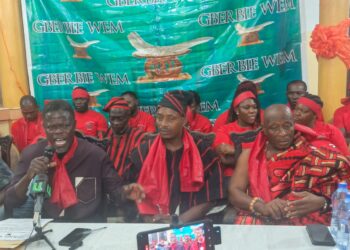
The newly established Ghana Academic Professional Forum (GAP-F) has voiced strong skepticism over the effectiveness of the National Democratic Congress (NDC) administration’s efforts to curb illegal mining activities, popularly known as galamsey, branding current efforts as largely superficial and ineffective.
At the launch and maiden press briefing held at the Ghana International Press Centre on June 18, Dr. Justice Kwaku Addo, Senior Lecturer at the University of Cape Coast’s Chemistry Department, criticized what he described as a “cosmetic” response from President John Dramani Mahama’s government toward the escalating environmental destruction wrought by galamsey.
Dr. Addo’s presentation, titled “The NDC Government’s Galamsey Fight: A Myth, Reality or a Mirage?”, highlighted ongoing environmental degradation despite official claims of progress. He pointed to rampant pollution of Ghana’s major rivers, including the Pra, Ankobra, and Birim, with turbidity levels far exceeding safe thresholds, making water treatment both challenging and expensive.
Using recent research findings from GAP-F, Dr. Addo revealed how these environmental damages have translated into serious public health issues, including a spike in skin diseases and diarrhoea in communities like the Shama District.
He lamented the apparent silence of influential figures and organizations that once vocally opposed galamsey, questioning whether their quietude reflects complicity or political expediency.
“The rivers and future generations are paying the price,” Dr. Addo stated. “Yet, key voices have gone quiet, raising questions about the sincerity of the fight.”
The forum also cited government data acknowledging that nearly half of Ghana’s forest reserves have been degraded or lost due to illegal mining and logging, emphasizing the urgent need for more robust action.
Among GAP-F’s demands are the repeal of the controversial Environmental Protection (Mining in Forest Reserves) Regulations, 2022 (L.I. 2462), which allows mining in protected forest reserves, and the imposition of harsher penalties on offenders.
Dr. Addo further called for a national state of emergency declaration in illegal mining hotspots and urged the active participation of youth, civil society, traditional leaders, and religious groups in environmental protection efforts.
“The future of Ghana’s environment, democracy, and prosperity depends on our collective action,” he stressed.
The launch event featured stark visual evidence, with photos of polluted rivers and devastated forest lands from affected regions serving as a somber reminder of the ongoing crisis.
As the country grapples with balancing economic interests and environmental sustainability, GAP-F’s challenge underscores growing impatience with perceived governmental inaction and calls for renewed commitment to safeguarding Ghana’s natural heritage.