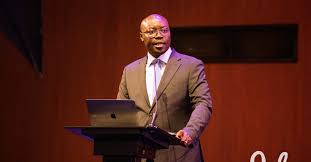
In a strategic bid to restore investor confidence and streamline public debt management, Finance Minister Dr. Cassiel Ato Baah Forson has announced plans to reopen Ghana’s domestic bond market beginning August 2025.
Speaking during the presentation of the 2025 Mid-Year Budget Review in Parliament on Thursday, Dr. Forson revealed that government is repositioning the bond market as a critical tool to finance the national budget deficit while driving down borrowing costs.
“Our objective is to re-engage domestic investors with a more competitive and transparent bond issuance process,” the Minister said. “This will allow us to deepen market participation and reduce our reliance on more expensive short-term borrowing.”
A key element of this renewed strategy includes the appointment of new bookrunners—banks and investment dealers with broader market access and expertise in pricing and structuring government securities.
“These bookrunners will not only manage issuances but also help us expand the investor base and establish efficient pricing mechanisms,” Dr. Forson explained.
As part of broader fiscal consolidation measures, the government is also rolling out a liability management programme aimed at reshaping the country’s debt portfolio. This includes the potential buyback of certain domestic bonds, careful sequencing of benchmark security issuances, and an emphasis on issuing longer-term bonds to stabilise the yield curve and ease refinancing pressures.
“Debt service risks remain a priority. Through liability management, we aim to smooth maturities and reduce rollover risks,” Dr. Forson noted.
The Minister disclosed that as of the first half of 2025, the government had honoured GH¢9.8 billion in coupon payments under the Domestic Debt Exchange Programme (DDEP). In addition, GH¢1.1 billion was paid to bondholders who opted out of the DDEP—a move aimed at gradually clearing arrears from 2024.
Looking ahead, he said GH¢10.2 billion in coupon payments is due to DDEP bondholders by the end of 2025, while GH¢724.1 million remains owed to non-tendered investors.
These steps, according to the Finance Minister, form part of a broader fiscal and debt reform plan designed to improve transparency, investor engagement, and long-term financial stability.
“The government is committed to restoring macroeconomic credibility,” Dr. Forson concluded, “and our bond market strategy is a key pillar in achieving that goal.”