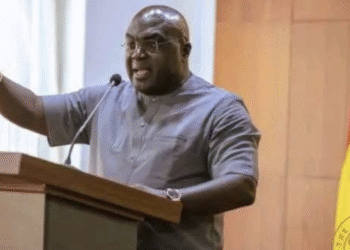
Charles Owusu Juanah has emphasized that freedom of expression is not a privilege granted by government but a fundamental constitutional right guaranteed under Ghana’s democratic system.
Addressing a press conference on constitutional democracy and civil liberties, the senior legal practitioner warned against what he described as increasing tendencies toward the criminalisation of free speech through intimidation, selective justice, and politically motivated arrests.
He stressed that Ghana’s constitutional framework already protects citizens’ right to express opinions, criticise public officials, and engage in political discourse without fear of arrest or harassment.
According to him, the repeal of the criminal libel law under the Criminal Code (Amendment) Act, 2001 (Act 602), was a deliberate democratic reform aimed at ensuring that dissent, activism, and political commentary are not treated as criminal offences.
He noted that the Constitution remains supreme under Article 1(2), meaning any action that undermines free expression or contradicts constitutional rights is legally void.
Mr Juanah further argued that the legal system already provides civil remedies for individuals who feel defamed, and therefore criminal prosecution should not be used as a tool to suppress criticism or silence opposing views.
Citing Ghanaian and international legal principles, he referenced the Supreme Court decision in the case of New Patriotic Party v. Inspector General of Police, which reinforced the protection of fundamental freedoms against executive interference.
He also pointed to global human rights instruments, including the Universal Declaration of Human Rights and the African Charter on Human and Peoples’ Rights, which affirm the right to freedom of expression as essential to democracy.
The legal practitioner cautioned security agencies and public officials to uphold professionalism and avoid enforcing directives that could infringe on citizens’ constitutional rights, warning that unlawful actions may attract future legal accountability.
He further noted that governments are temporary, but constitutional violations have lasting consequences, stressing that public office must always be exercised with integrity and respect for the rule of law.
Mr Juanah called on the Ghana Bar Association, civil society organisations, the media, and religious bodies to actively defend constitutional freedoms and ensure that democratic space is not eroded.
He concluded that democracy thrives only when citizens can freely express themselves without fear, insisting that Ghana must never drift into a system where political expression is treated as a criminal act.