France has stepped up efforts to enforce international sanctions against Russia by intercepting a third oil tanker allegedly linked to Moscow’s so-called “shadow fleet,” underscoring growing Western efforts to curb revenues used to finance the war in Ukraine.
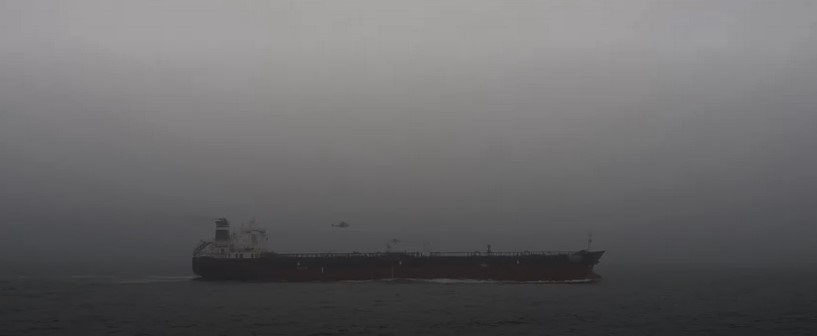
French authorities announced the seizure of the oil tanker Tagor in the Atlantic Ocean, describing the operation as part of a broader campaign to target vessels accused of circumventing sanctions imposed on Russia following its invasion of Ukraine.
President Emmanuel Macron said the vessel was intercepted in international waters with assistance from several international partners, including the United Kingdom, and in accordance with maritime law.
According to French officials, the Tagor, a crude oil tanker registered in Madagascar, had departed from the Russian port of Umba and is currently under sanctions imposed by the European Union, the United Kingdom and the United States.
Macron argued that vessels operating outside international regulations not only undermine sanctions regimes but also pose serious safety and environmental risks.
“It is unacceptable for ships to circumvent international sanctions, violate the law of the sea, and fund the war that Russia has been waging against Ukraine,” he stated.
The seizure has triggered a sharp response from Moscow, which condemned the action as unlawful. Kremlin spokesman Dmitry Peskov rejected France’s claim that the interception complied with international law, describing the operation as an act bordering on piracy.
Russian authorities also expressed concern about the welfare of the vessel’s crew. The Russian Embassy in Paris said it had requested information from French officials regarding reports that the ship’s captain is a Russian citizen and sought clarification on whether other Russian nationals were on board.
The interception marks the latest move in a coordinated Western effort to disrupt Russia’s shadow fleet, a network of aging tankers and shipping companies allegedly used to transport Russian oil outside established sanctions frameworks.
European governments have increasingly voiced concerns that many of these vessels operate with questionable insurance coverage, inadequate safety certification and, in some cases, false registration documents.
The latest seizure follows similar actions by France earlier this year. In March, French naval forces detained another tanker in the Mediterranean Sea that authorities linked to Russia’s sanctions-evasion network.
In January, French officials also stopped a vessel between Spain and Morocco over suspicions of its involvement in shadow fleet activities. Belgium, with French support, later intercepted another tanker accused of operating under a false flag and carrying fraudulent documentation.
The operations reflect growing European determination to tighten enforcement of sanctions despite shifting approaches elsewhere. While the United States has recently relaxed some restrictions on Russian oil already at sea due to disruptions in global energy supplies linked to conflicts in the Middle East, European nations have largely maintained a tougher stance.
The United Kingdom has similarly identified dismantling Russia’s shadow fleet as a strategic priority, arguing that reducing the flow of oil revenues is essential to weakening Moscow’s ability to sustain its military operations in Ukraine.
As Western governments expand monitoring and enforcement efforts at sea, maritime sanctions are increasingly emerging as a significant front in the broader geopolitical contest between Russia and its allies on one side, and Ukraine’s Western supporters on the other.