
















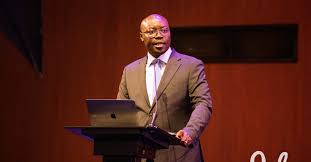
Ghana’s Finance Minister, Dr Cassiel Ato Baah Forson, has made a strong appeal to investors and Ghanaians living abroad to channel their resources into the country, insisting that the economy is stabilising and ready for renewed growth.
Speaking during President John Dramani Mahama’s town hall engagement with the Ghanaian diaspora in London as part of a five-day official visit to the United Kingdom, Dr Forson declared that “Ghana is open for business” and encouraged citizens abroad to return and contribute to national development.
He said the government was working with the Bank of Ghana to ensure that diaspora remittances are effectively captured in the country’s balance of payments, noting that inflows already exceed $7 billion annually.
Dr Forson described the diaspora as a crucial partner in nation-building, adding that many Ghanaians in government, including himself and Roads and Highways Minister Kwame Agbodza, once lived in the UK and understand the value of contributing from abroad or returning home to serve.
He used the platform to reflect on Ghana’s recent economic challenges, describing the 2022 downturn as one of the most severe in the country’s history. According to him, the period was marked by currency depreciation, high inflation, declining investor confidence and loss of access to international capital markets.
He further noted that Ghana’s credit ratings were downgraded multiple times in 2022, with agencies such as Moody’s, S&P, and Fitch all lowering the country’s sovereign ratings to unprecedented levels, which worsened borrowing conditions and strained key state institutions.
Dr Forson also highlighted difficulties faced by institutions such as Cocobod and domestic banks, which struggled to access external financing and issue trade instruments due to weakened international confidence.
Despite these challenges, he said the situation has now improved significantly, stressing that “the good news is that today our country is back.”
He credited the turnaround to fiscal discipline and policy reforms implemented under President Mahama’s administration, which he said have helped restore macroeconomic stability.
Dr Forson announced that Ghana recorded 6% GDP growth in 2025, with non-oil GDP expanding by 7.6%, the highest in 14 years. He also stated that Ghana’s economy has now surpassed the $100 billion mark, placing it among the top eight economies in Africa, with GDP per capita rising to $3,385.
On debt sustainability, he said Ghana’s debt position has improved significantly, moving from high-risk distress to moderate risk, with debt-to-GDP falling to 44.7%, ahead of IMF projections.
He added that inflation has declined sharply from 23.8% in late 2024 to 3.4% in April 2026, while interest rates have also fallen, with the 91-day Treasury bill dropping from 28.4% to 4.8%.
According to him, improved fiscal conditions have also led to lower borrowing costs across government securities, with medium-term bonds now trading between 11% and 12%.
Dr Forson further noted that the central bank’s monetary policy adjustments have helped ease pressure on the economy, with the policy rate reduced significantly within the same period.
He also reported a current account surplus of 8.3% of GDP in 2025, describing it as a major reversal from previous persistent deficits.
He expressed optimism that the positive economic indicators will be sustained, emphasising the government’s commitment to maintaining fiscal discipline and strengthening investor confidence.
Dr Forson concluded by urging the diaspora community to see themselves as key stakeholders in Ghana’s economic transformation, stating that their participation remains vital to the country’s long-term development agenda.






