
















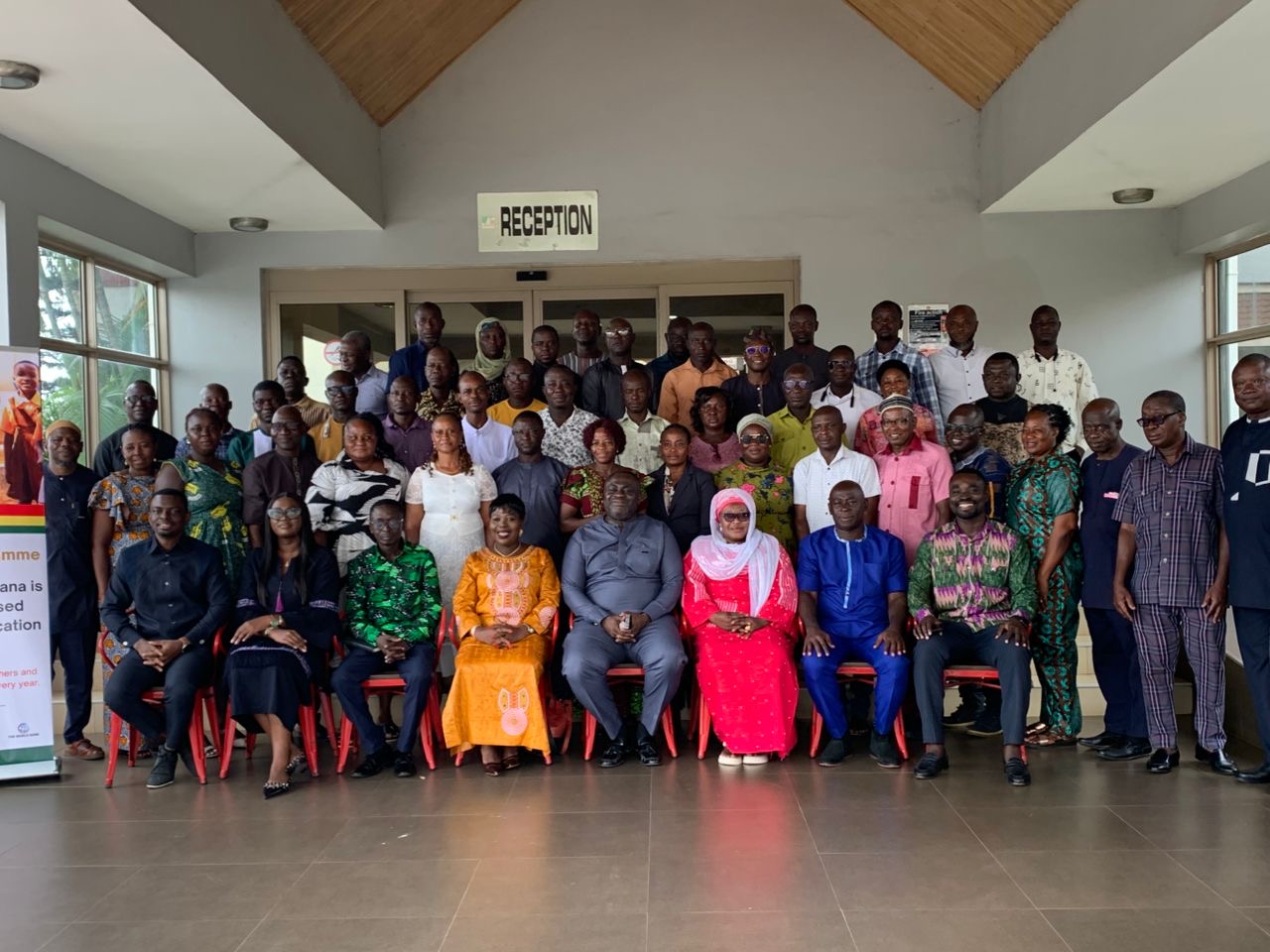
The Ghana Education Service (GES) has intensified efforts to improve the quality of early childhood education by rolling out a nationwide training programme expected to equip more than 32,000 kindergarten teachers with modern, child-centred teaching methods.
The initiative, being implemented under the Early Childhood Education Harmonised Scale Programme (ECEHSP), is aimed at strengthening foundational learning and ensuring the effective delivery of the kindergarten curriculum across the country.
Speaking at the opening of the fourth cohort training for District Teacher Support Teams at Fumesua near Kumasi, the National Director of the Early Childhood Education Unit, Mrs. Adiza Tassa, said the programme demonstrates GES’s commitment to raising teaching standards and improving learning outcomes for young children.
She explained that the reform seeks to address longstanding challenges in kindergarten education by building teachers’ capacity in play-based instructional methods that promote literacy, numeracy, creativity, communication, collaboration, problem-solving and critical thinking.
Mrs. Tassa disclosed that the reforms would also eliminate the practice of assigning teachers who are pregnant, recovering from maternity leave, unwell or facing disciplinary action to kindergarten classrooms, stressing that the country’s youngest learners deserve qualified and committed educators.
She described kindergarten as the foundation of every child’s educational journey, noting that weak early learning experiences could negatively affect future academic performance and national development.
The latest training brought together education officers and teacher support teams from the Ashanti, Western and Upper East regions to strengthen their facilitation and monitoring skills before cascading the training to teachers in their respective districts.
Mrs. Tassa urged parents to enrol their children in public kindergartens, assuring them that ongoing reforms have significantly improved the quality of teaching in public early childhood institutions.
The Early Childhood Education Technical Manager, Mr. Francis LordAcquah, said the programme is expected to strengthen the skills of more than 30,000 teachers and improve learning outcomes for about 1.2 million kindergarten pupils nationwide.
Ashanti Regional Director of Education, Dr. William Kwame Amankra Appiah, also underscored the need to modernise kindergarten classrooms across the country, saying improved learning environments would boost both teacher effectiveness and children’s confidence.
The programme is supported by the Ministry of Education, the World Bank, UNICEF, SCALE Funders and development partners, including Sabre Education, Chance for Childhood, Children Believe, Right To Play, Lively Minds and Innovations for Poverty Action.






