
















The Ministry of Local Government, Chieftaincy and Religious Affairs has begun efforts to establish a national database of shrines and other religious sites as part of measures to better understand Ghana’s traditional and spiritual landscape.
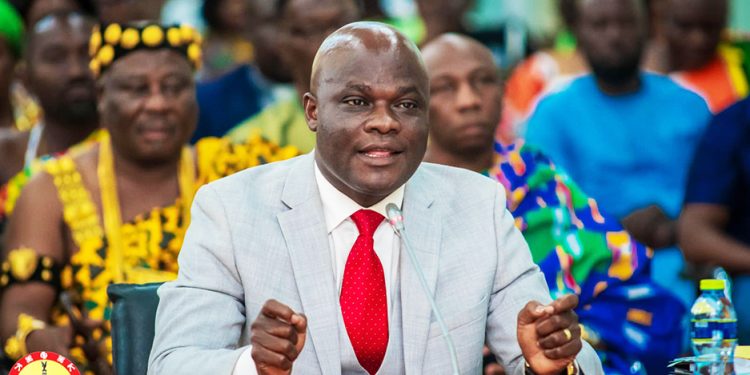
The sector Minister, Ahmed Ibrahim, said a specialised working group has been constituted to undertake the exercise, which will focus on identifying the number of shrines across the country and developing a standard definition of what qualifies as a shrine.
Speaking before Parliament’s Committee on Assurances, Mr Ibrahim explained that the initiative is necessary because shrines exist in various forms, making their identification and classification complex.
He said the working group comprises officers from the Chieftaincy and Religious Affairs Directorate, Policy, Planning, Monitoring and Evaluation, Research, Statistics, and Information Management units of the Ministry.
The committee will also collaborate with Regional Coordinating Councils to gather information from communities across the country.
“The Minister of Local Government, Chieftaincy and Religious Affairs has set up a working group comprising officers from Chieftaincy and Religious Affairs, Policy, Planning, Monitoring and Evaluation, Research, Statistics and Information Management directorates to create the database on shrines and other religious sites in the country,” Mr Ibrahim stated.
According to him, the exercise goes beyond simply counting physical locations, as shrines can take different forms depending on cultural and spiritual beliefs.
He noted that some individuals may claim ownership of shrines or engage in practices they describe as religious, making it important for the state to establish clear criteria.
Mr Ibrahim stressed that a proper framework was needed to guide authorities in determining what constitutes a shrine, considering the spiritual dimensions involved.
“The nature of shrines will have to be agreed on. That is why a committee with expertise has been put in place,” he said.
He added that shrines are not always represented by visible structures and may sometimes be associated with objects or symbols regarded as spiritually significant.
“A shrine can be a pen. It can be a photo, a picture. It can be anything. And these are spiritual issues. The lawyers may disagree with you. So we need to have a very firm foundation as to what a shrine is,” he explained.
The Minister indicated that the database, once completed, would provide government with reliable information to support policy decisions relating to chieftaincy, traditional religion and cultural heritage management in Ghana.






