
















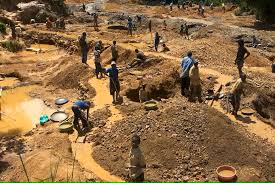
Civil society organisation Arise Ghana has urged the government to intensify and sustain efforts to combat illegal mining, warning that the continued destruction of Ghana’s water bodies poses a serious threat to the country’s health and agricultural future.
The group said the fight against illegal mining, popularly known as galamsey, requires a comprehensive and unwavering national commitment rather than intermittent interventions.
Speaking at a media engagement on the state of Ghana’s agricultural sector, a leading member of Arise Ghana, Selorm Dramani Dzramado, said the organisation would continue to put pressure on the government until meaningful progress is made in addressing the crisis.
According to him, the economic interests of a small group of illegal miners should not be allowed to override the health and environmental interests of the wider population.
“Some group of people cannot continue to make money at the expense of our health,” he said.
Mr Dzramado appealed directly to the government to demonstrate stronger political will in dealing with illegal mining, stressing that the fight must be pursued with a clear objective of permanently ending the destruction caused by the practice.
“To the occupants or the occupiers of the Jubilee House, I cease this opportunity to tell them that the fight against galamsey shouldn’t be done in a lackadaisical manner. It shouldn’t be done haphazardly. It should be a total commitment to fight and succeed, to render that injurious enterprise a thing of the past,” he stated.
Arise Ghana’s concerns come amid continuing public debate over the impact of illegal mining on rivers and other natural resources, as well as its implications for agriculture and access to safe water.
Beyond the galamsey crisis, the organisation also called for legislative backing for reforms being introduced by the Ministry of Food and Agriculture.
Mr Dzramado said an independent assessment conducted by Arise Ghana indicated that some of the ministry’s policies were producing encouraging results.
However, he stressed that relying solely on administrative measures could undermine the sustainability of the reforms.
He therefore urged government to introduce the necessary legislation to institutionalise the reforms and ensure they survive beyond changes in government or policy priorities.
The group believes that stronger environmental protection measures, sustained political commitment and legislative support for agricultural reforms are necessary to safeguard Ghana’s natural resources and strengthen the agricultural sector.






