
















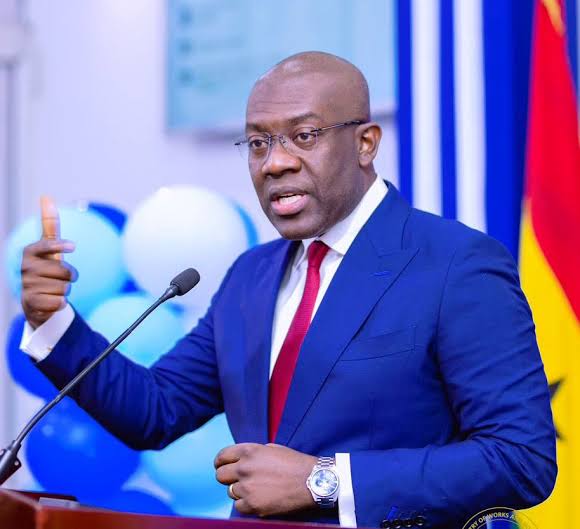
Ghana’s downstream petroleum sector is absorbing more than GH¢500 million in costs every month because of the government’s ongoing GH¢2-per-litre cut to diesel prices, according to Kojo Oppong Nkrumah, Chairman of the New Patriotic Party’s Policy Co-ordination Committee and a sitting MP.
Speaking on the issue, Oppong Nkrumah argued that the policy isn’t really being funded by the state — it’s being paid for by suspending the statutory margins that normally go to fuel-sector institutions and companies. He put the value of those suspended margins at roughly GH¢519.12 million a month, based on average diesel consumption of about 259.56 million litres. Factor in the knock-on support required for the Unified Petroleum Price Fund (UPPF), he said, and the true monthly cost climbs closer to GH¢683 million.
He estimated that across April, May, August and September 2026, a combined GH¢2.076 billion has been withheld from BOST, fuel distributors, the fuel-marking system and the UPPF — money he says still hasn’t been replaced. His warning: what looks like relief at the pump may simply be building up debt elsewhere in the sector.
Where the money is being lost
BOST — GH¢31.15 million a month. The 12 pesewa-per-litre BOST Energy Margin, meant to fund storage tank and pipeline maintenance and infrastructure expansion, has been suspended. Oppong Nkrumah noted that BOST’s operational duties don’t disappear just because the funding does — and warned that continued shortfalls could lead to deferred maintenance, unpaid suppliers, stalled projects, and borrowing that eventually lands back on government.
NPA and distributors — GH¢67.49 million a month. The 26 pesewa Primary Distribution Margin, which funds moving fuel from depots to distribution points, has also been suspended. He said distributors are left covering that gap themselves, which could eventually turn into supplier arrears.
Fuel marking — GH¢23.36 million a month. The nine-pesewa Fuel Marking Margin, used to guard against smuggling and product adulteration, has lost its funding too — even though the regulatory work it pays for still needs to happen.
UPPF — GH¢397.13 million a month. This is the single biggest piece. The UPPF, run by the National Petroleum Authority, compensates transporters for moving fuel to farther-flung parts of the country so prices stay roughly consistent nationwide. Oppong Nkrumah said squeezing its funding while keeping its obligations intact could put real strain on the NPA and on transporters.
The bigger picture
Taken together, he estimated the shortfall at about GH¢519 million for one month, GH¢1.04 billion over two months, and GH¢1.56 billion over three — or, including UPPF support, GH¢683 million, GH¢1.37 billion, and GH¢2.05 billion respectively.
He also flagged that diesel is already selling above GH¢17 a litre at major Oil Marketing Companies and could pass GH¢18 even with the government’s intervention in place — a projection he based on a 4.85% rise in international diesel prices and a 0.88% cedi depreciation. Without the GH¢2 cut, he estimated pump prices could exceed GH¢20 a litre.
For the September 16–30 pricing window, he cited a jump in crude oil from US$92.11 to US$98.18 a barrel (up 6.59%), along with international price increases of 14.57% for petrol, 4.85% for diesel, and 13.47% for LPG, plus a weaker cedi (GH¢11.40 to GH¢11.50 per dollar). He attributed much of this to the renewed Iran–US–Israel conflict, disruption near the Strait of Hormuz, and shrinking global petroleum stockpiles.
His proposed fix: tap the oil windfall, don’t starve the sector
Oppong Nkrumah pointed out that the 2026 Budget assumed a crude oil benchmark of US$76.22 a barrel with projected output of 37.95 million barrels (about 103,959.73 barrels/day). With crude touching US$110 and averaging near US$89 for the year, he estimated government has pulled in an extra GH¢8–9 billion in oil-related revenue — around six times the downstream burden he’s describing.
His recommendation: use some of that windfall for consumer relief instead of hollowing out BOST, NPA, and other downstream players. More specifically, he proposed suspending select petroleum taxes rather than margins — pointing to the Energy Sector Shortfall and Debt Repayment Levy (GH¢1.93 per litre of diesel, following a 2025 increase), which is nearly equal to the current GH¢2 relief. Doing it this way, he argued, would make the cost transparent in the national budget for Parliament and the public to scrutinize, while letting BOST, distributors, fuel marking, and the UPPF keep the revenue they need to function.
History repeating?
He noted Ghana has already spent heavily on similar interventions — roughly GH¢800 million over two months for an earlier diesel measure, and about GH¢99.4 million for a one-month petrol price cut of GH¢0.36 per litre. If the current diesel intervention runs into a third month, he said, cumulative spending on these interventions could near GH¢2.5 billion — and he’s pushing for government to publish the full cost rather than describing it only as a “GH¢2-per-litre” cut.
His closing warning was that the arrangement risks repeating the mistakes behind Ghana’s past energy-sector debt crises. The real question, he said, isn’t whether consumers should be shielded from global fuel price swings, but who pays for that protection — the national budget, or the downstream institutions now absorbing the cost. Left unresolved, he said, the policy’s mounting monthly obligations could eventually generate arrears, deferred maintenance, and new borrowing — with the burden ultimately falling back on taxpayers.

TraffiTech-GH Rollout: Transport Operators Threaten Nationwide Shutdown Over Unresolved Concerns
Commercial transport operators have threatened a nationwide withdrawal of services from November 1, 2026, warning that the planned introduction of...





