
















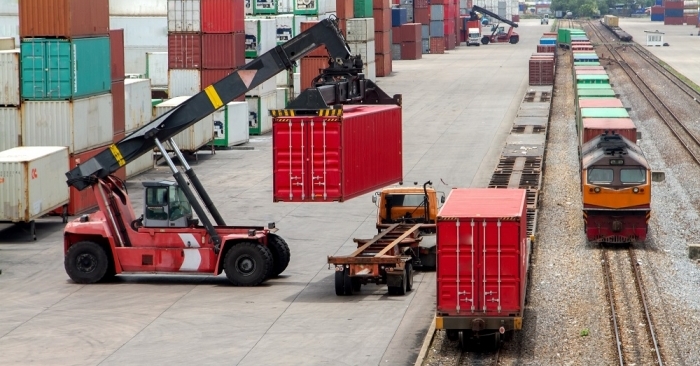
Importers in Ghana are warning that delays in returning empty shipping containers are adding to the cost of doing business, with truck operators facing prolonged waiting periods and additional charges at shipping lines’ terminals.
The Importers and Exporters Association of Ghana says the situation is partly driven by inadequate space for receiving empty containers and is calling for the establishment of dedicated holding depots along the country’s railway network to address the bottleneck.
The Association’s Executive Secretary, Samson Asaki Awingobit, believes the proposed facilities would provide alternative storage locations for empty containers, ease pressure on port infrastructure and improve the efficiency of cargo operations.
He made the proposal during a courtesy call by the Association’s leadership on the Ghana Railway Development Authority, where discussions centred on improving freight transportation and addressing logistical challenges affecting importers.
Mr Awingobit explained that trucks transporting empty containers sometimes spend several days waiting to offload at shipping lines’ designated terminals because of limited receiving capacity.
The delays, he said, expose truck operators to additional retention charges, which ultimately increase the operational costs of importers and contribute to higher prices of goods in the market.
He argued that converting suitable locations along the railway network into dedicated container holding facilities would help address the problem.
“That is the way to go. You can always send the empty containers there and bring them when the vessel is ready,” he said.
He further expressed concern that additional payments made to terminal operators and shipping lines through such delays represent costs that could otherwise be avoided.
“Those monies to MPS and the shipping lines leave the shores of Ghana,” he said.
Railway network identified as alternative logistics solution
Beyond the proposed container depots, the Association is pushing for a broader integration of railway infrastructure into Ghana’s port and freight transportation system.
Mr Awingobit said increased collaboration between the railway authority, port operators, shipping lines and other stakeholders would be necessary to improve cargo handling and reduce logistical bottlenecks.
The Association believes greater reliance on rail freight could reduce the pressure on trucks, ease congestion on major roads and facilitate the movement of goods from the ports to inland destinations.
It is also positioning the railway network as an important component of efforts to lower transportation costs and improve the competitiveness of Ghana’s trading environment.
Mr Awingobit assured the Ghana Railway Development Authority of the Association’s readiness to support initiatives aimed at improving freight transportation and logistics.
He, however, stressed that the Association would hold relevant institutions accountable for delivering on commitments to improve the country’s transportation and trade infrastructure.






