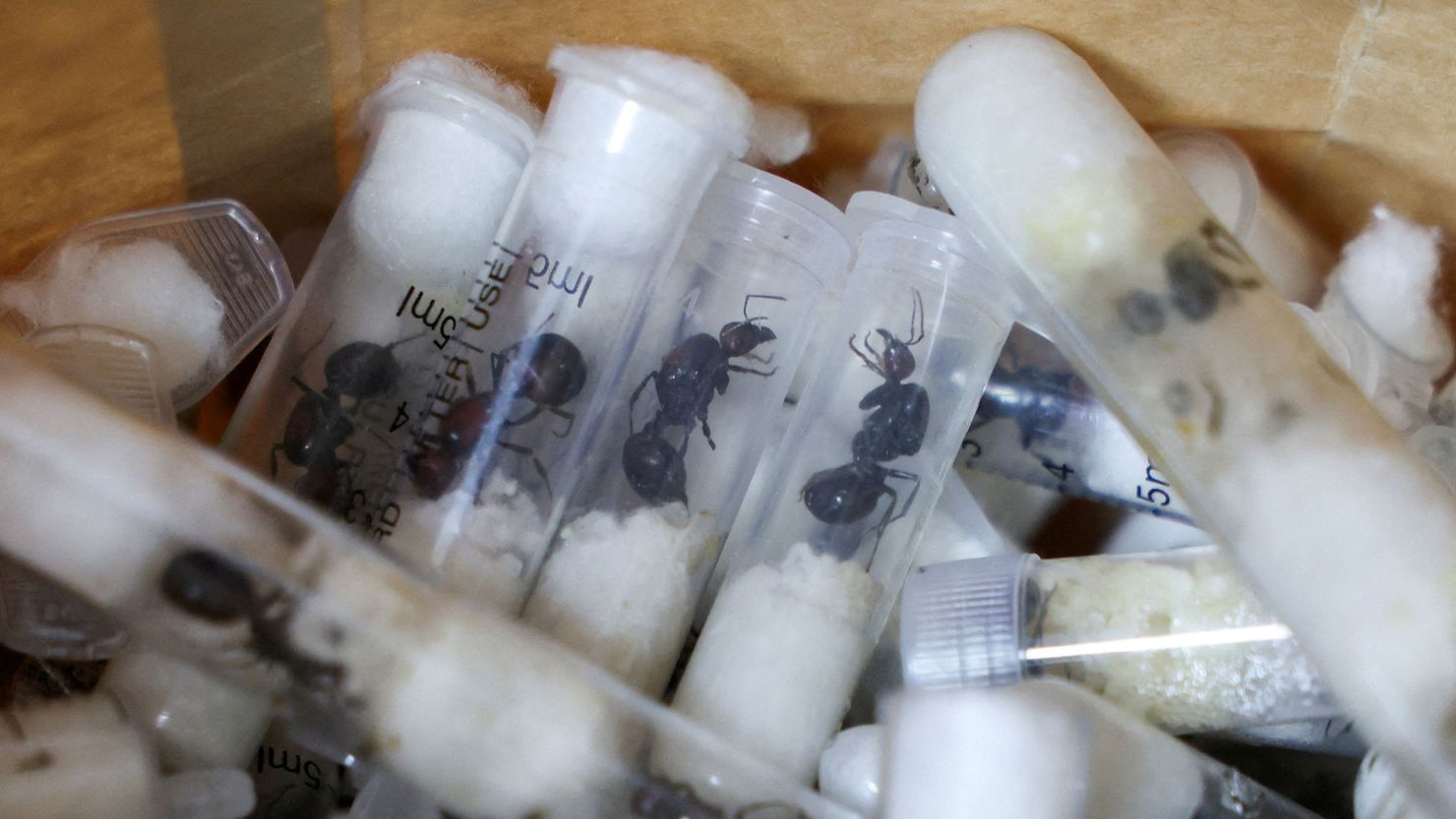
Two Belgian teenagers, Lornoy David and Seppe Lodewijckx, both 19, have been arrested in Kenya after being found with 5,000 live ants in their possession — a case that officials are calling a stark example of the rising trend in trafficking lesser-known species.
The teens were detained on April 5, in Nakuru County, during an operation that uncovered the insects, which included the Messor cephalotes species, a large red harvester ant native to East Africa.
The ants, carefully packed in 2,244 test tubes filled with cotton wool, were being prepared for transport to international markets where they are highly sought after as exotic pets. In court, the visibly distressed teens claimed they were simply “collecting the ants for fun,” asserting that they had no knowledge of the illegal nature of their actions.
Kenya’s Wildlife Service (KWS) has expressed concern over this increasingly prevalent form of wildlife trafficking, pointing out the shift from poaching iconic, large species like elephants and rhinos, to targeting smaller but ecologically vital species like ants. According to KWS, the illegal trade in these insects is not only a violation of Kenya’s sovereignty over its natural resources but also poses a serious threat to the country’s biodiversity. The loss of such creatures undermines local communities and research institutions that rely on them for both ecological and economic benefits.
“The illegal export of these ants harms Kenya’s ecological balance,” stated a KWS official. The 5,000 ants, estimated to be worth 1 million Kenyan shillings (approximately $7,700), were destined for markets abroad, where the price fluctuates depending on the species and destination.
In a related case, Dennis Ng’ang’a, a Kenyan national, and Duh Hung Nguyen, a Vietnamese citizen, were charged with the illegal possession and trafficking of 400 ants found in their Nairobi apartments. These two separate incidents highlight the increasing vulnerability of lesser-known species to illicit wildlife trafficking.
Philip Muruthi, Vice President for Conservation at the African Wildlife Foundation, emphasized the critical ecological role that ants play in maintaining healthy ecosystems. “Ants are integral to soil enrichment, seed germination, and serve as a food source for various species, including birds,” Muruthi noted. He also warned of the dangers posed by the uncontrolled movement of such species, which could inadvertently introduce diseases harmful to ecosystems and agricultural industries in importing countries.
KWS has urged that any trade involving these species must be strictly regulated, warning that the uncontrolled extraction of such resources threatens both Kenya’s natural heritage and the broader ecological balance.