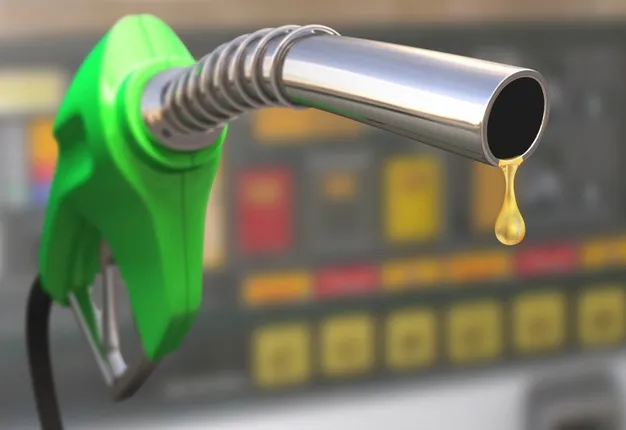
The price of crude oil is projected to dip further in 2025, with the World Bank forecasting an average of $64 per barrel, down from $80.70 in 2024. This marks a significant price reduction, driven largely by global economic uncertainties and shifting market dynamics.
The World Bank’s April 2025 Commodity Markets Outlook anticipates that oil prices could fall to $60 per barrel by 2026, should current trends persist. This forecast comes amid a period of relative stability in exchange rates, with fuel prices at the pump expected to remain steady barring any major global disruptions.
The recent decline in oil prices is attributed to weakening global economic performance, which led to a sharp drop below $63 per barrel in early April—marking the lowest price since April 2021. A pivotal moment occurred on April 2, when the United States imposed significant trade tariffs, leading to a dramatic $12 per barrel drop over a mere four-day period. This represents the 11th-largest four-day decline in oil prices since 1990.
Despite the ongoing price decline, global oil demand has shown resilience. In the first quarter of 2025, consumption rose by 1.2 million barrels per day (1.2%), slightly outpacing the previous quarter’s growth of 1.1%. China’s oil demand grew by 0.2 million barrels per day (1.4%), a deceleration compared to the 1.0% growth in the final quarter of 2024. Advanced economies also saw modest recovery, with demand increasing by 0.4 million barrels per day (0.9%).
In terms of regional trends, oil demand continued to slow in major markets such as China, Europe, and Latin America throughout 2024. However, regions such as East Asia and the Pacific (excluding China), the Middle East and North Africa, and South Asia saw stronger consumption growth.
A major factor in China’s slowdown in oil demand is the rising popularity of electric vehicles (EVs). In 2024, EVs accounted for more than 40% of new car purchases in China, which contributed to a reduction of approximately 0.45 million barrels per day in oil consumption. As EV adoption accelerates in key markets, this trend could continue to dampen future global oil demand, influencing both pricing and consumption patterns.
Despite these shifts in demand, market experts warn that the future of global oil prices remains volatile, with geopolitical factors, economic policies, and technological advances continuing to shape the market landscape.