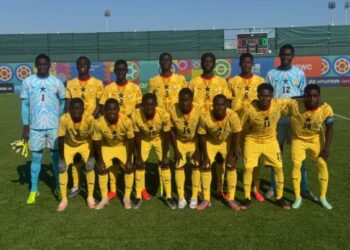
As the Black Stars prepare for a high-stakes showdown against Nigeria in the 2025 Unity Cup, all eyes are on five promising newcomers who could bring a new spark to Ghana’s national team.
Ghanaian journalist Rahman Osman, reporting from the United Kingdom, has profiled the quintet, offering fans a glimpse into what these players might bring to the pitch if handed a start.
A New Era in the Making?
These five debutants—spanning leagues across Europe and North America—represent a new generation of Ghanaian football talent. Here’s a closer look:
🔹 Joseph Anang (Goalkeeper)
At 24, Anang boasts experience from his time at West Ham United and now commands the post at St Patrick’s Athletic in Ireland. In 2025 alone, he has racked up 18 appearances, with 7 clean sheets and 22 goals conceded—highlighting his potential to bring stability between the sticks.
🔹 Aaron Essel (Centre Back)
A rising defensive talent, the 19-year-old is currently on loan at North Texas FC from Scotland’s St Johnstone. Having impressed at the U20 AFCON in Egypt with mature leadership, Essel is being tipped as a future defensive anchor for the Black Stars.
🔹 Caleb Yirenchi (Midfielder)
Plying his trade in Denmark with FC Nordsjaelland, Yirenchi has notched 2 goals and 2 assists this season, showing his value as a creative force in midfield.
🔹 Abdul Aziz Issah (Midfielder)
The Barcelona Athletic starlet was one of Ghana’s brightest at the U20 AFCON, earning two Man of the Match awards. His flair, vision, and versatility make him one to watch closely.
🔹 Mohammed Gadafi Fuseini (Forward)
With 11 goals and 3 assists for Royal Union St Gilloise, the striker played a pivotal role in their historic league title—ending a 90-year drought. His form could offer Ghana a potent edge in attack.
Unity Cup: A Launchpad for the Future?
With youth, international experience, and momentum on their side, these five debutants could be the breath of fresh air Ghana needs. Whether they start or come off the bench, their inclusion marks a strategic investment in the Black Stars’ long-term resurgence.