
















The proposed Accra-Kumasi Expressway will operate under a dedicated tolling regime as the Government moves to introduce technology-driven revenue mobilisation for road infrastructure development and maintenance.
The Minister for Roads and Highways, Mr Kwame Governs Agbodza, said motorists who choose to use the expressway would pay for the service and benefit from shorter travel times, while those unwilling to pay would retain access to the existing road network.
He said the arrangement formed part of efforts to provide motorists with alternatives while creating a sustainable financing mechanism for major road projects.
“We are providing alternatives. We do not expect any demonstrations that the Accra-Kumasi Expressway is charging 20 dollars. You are not compelled to use it,” Mr Agbodza said.
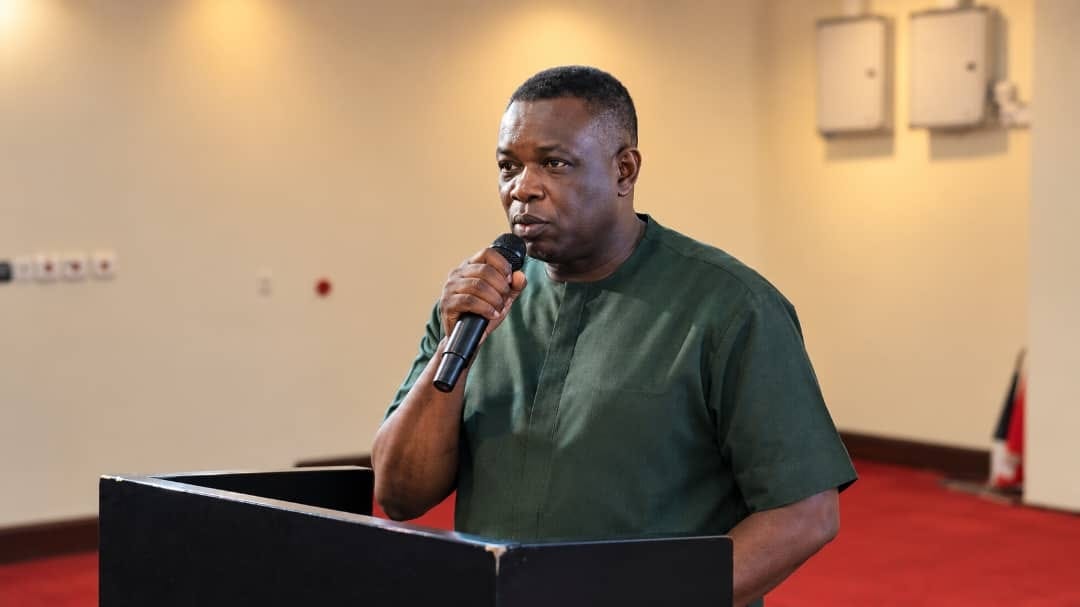
The Minister was speaking at the opening of the Transport Sector Review Conference in Ho.
He said Parliament’s approval in July this year of a 20-year Public-Private Partnership (PPP) concession had paved the way for the modernisation of road revenue collection through technology.
Under the proposed system, selected upgraded roads would use a multi-lane, free-flow electronic tolling system to improve revenue collection and reduce congestion associated with conventional toll booths.
Mr Agbodza said revenue from the Accra-Kumasi Expressway would be used to finance its operations and maintenance, as well as support future expansion of the road network.
He said the Government was considering extending the expressway from Kumasi to Tamale as part of its long-term plans to improve connectivity along the major transport corridor.
The Minister also disclosed that contractors had returned to some sections of the existing Accra-Kumasi bypass projects.
He expressed optimism that contractors working on the remaining sections would return to site within the coming weeks to complete the outstanding works.
Meanwhile, Mr Agbodza called for a policy to restrict certain categories of oversized and heavy-duty vehicles to designated mining enclaves and other controlled areas to protect public roads from excessive loading.
He said roads were engineered to carry specific tonnages and could not reasonably be expected to withstand every category and weight of vehicle.
According to him, continued reliance on axle-load enforcement had not sufficiently addressed the problem of overloaded vehicles and therefore required a broader policy response.
“We must make a decision as to whether some of the sizes of vehicles we see on our public roads should not be restricted to only mining enclaves and not on public roads,” he said.
He added that where exceptions were granted, the movement of such vehicles would have to be carefully supervised to ensure they reached their destinations without causing unnecessary damage to public infrastructure.






