
















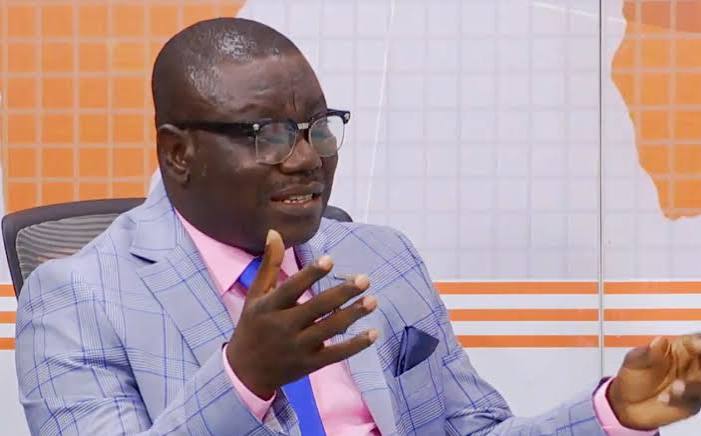
Chairman of Parliament’s Finance Committee, Isaac Adongo, has defended the current administration against accusations that it introduced a new electronic transaction levy, arguing that the controversial 0.75 per cent wallet-to-bank transfer fee was approved under the previous government.
Speaking during parliamentary deliberations on a statement presented by Finance Minister Cassiel Ato Forson, Adongo disclosed that documents available to him indicate that the Bank of Ghana granted approval for the charge in January 2024, before the current administration took office.
According to the Bolgatanga Central MP, a letter dated January 31, 2024, issued by the Bank of Ghana to Mobile Money Fintech Limited provided a “no objection” for the implementation of several mobile money charges. These included a 0.75 per cent fee on transfers from mobile money wallets to bank accounts, capped at GH¢55, as well as a one per cent fee on cash-out transactions below GH¢2,000.
Adongo argued that the existence of the approval contradicts claims by the Minority Caucus that the Mahama administration had introduced a new form of the Electronic Transfer Levy (E-Levy).
He maintained that the charge was conceived and approved during the tenure of the previous administration and therefore should not be attributed to the current government.
The Finance Committee Chairman accused the Minority of misleading the public by presenting the fee as a newly introduced tax measure and challenged opposition lawmakers to retract their allegations.
His remarks come amid growing political controversy over the proposed wallet-to-bank transfer charge announced by Mobile Money Fintech Limited. The Minority has argued that the fee effectively amounts to a reintroduction of the repealed E-Levy, a claim government officials have consistently rejected.
Meanwhile, the Bank of Ghana has directed Mobile Money Fintech Limited to suspend the implementation of the proposed 0.75 per cent charge, which was scheduled to take effect on June 1, 2026.
The central bank said the suspension would allow for further consultations and stakeholder engagement before any final decision is made on the proposed fee structure.
The latest development has intensified debate over digital transaction costs in Ghana, with both government and opposition figures continuing to trade blame over the origins and implications of the proposed charge.






