Africa risks being left out of critical global decisions on Solar Radiation Modification (SRM) unless countries on the continent invest in scientific research, public engagement and institutional capacity, experts and policymakers have warned.
They said Africa’s vulnerability to climate change made it particularly important for the continent to develop the expertise needed to independently assess the potential risks and benefits of emerging climate intervention technologies.
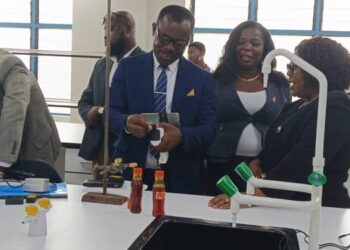
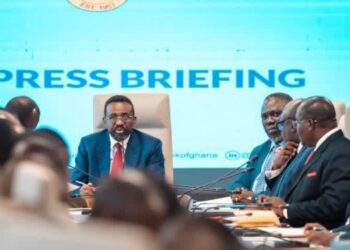
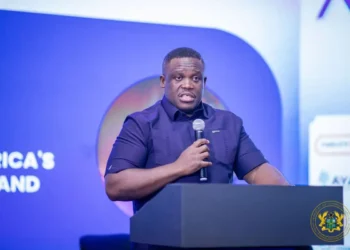
The call was made at a policy dialogue on SRM governance organised by the Science and Technology Policy Research Institute of the Council for Scientific and Industrial Research (STEPRI-CSIR), in collaboration with research partners from the Philippines.
The dialogue was held under the Assessment of Knowledge and Governance towards Solar Radiation Modification in Ghana (AsKGov-SRM-Ghana) project, funded by Degrees Initiative.
Solar Radiation Modification refers to proposed techniques aimed at temporarily reducing global temperatures by reflecting a portion of sunlight away from the Earth.
Dr Wilhelmina Quay, Director and Chief Research Scientist at STEPRI-CSIR, said growing interest in SRM was partly driven by concerns that existing climate mitigation and adaptation efforts were not sufficient to keep global warming within the 1.5-degree Celsius target under the Paris Agreement.
However, she said SRM remained surrounded by scientific uncertainties and unresolved questions about ethics, governance and equity.
“There is no comprehensive international framework guiding SRM research, testing, deployment or potential termination. The questions of accountability, community participation and the management of cross-border impacts remain largely unanswered,” she said.
Dr George Manful, an adviser to the Chair of the African Group of Negotiators, said Africa should not become a passive recipient of technologies or rules developed by other regions.
He called for the development of local expertise to enable African countries to independently assess SRM and protect their interests in international negotiations.
“Africa must not be a passive recipient of technologies or rules developed elsewhere. I urge the continent to build the expertise needed to independently assess SRM’s risks and protect its own interests,” he said.
Dr Marcos Regis da Silva, Policy Engagement Director at Degrees Initiative, said the organisation was supporting developing countries through research funding, expert networks and scientific and policy workshops.
He stressed that Degrees Initiative had no institutional position for or against SRM and maintained that any possible deployment of the technology must remain secondary to deep reductions in greenhouse gas emissions.
He warned that limited social science research on the potential impacts of SRM could leave African scientists and negotiators without the evidence needed to participate effectively in global decision-making.
Research findings presented at the dialogue suggested that SRM could reduce projected warming in parts of Africa, but experts cautioned that its potential impact on rainfall, monsoon patterns and air quality remained uncertain.
Dr Francis Nkrumah, a Senior Lecturer at the University of Cape Coast, said modelling studies conducted in Ghana and the Philippines showed that some areas could become drier while others could experience increased rainfall.
“The science can tell us what SRM might do to our temperatures, our rains, our air and our fields. It cannot tell us whether it is wise, fair, or just,” he said.
Mr Raymond Ohene Ofori of the Ministry of Environment, Science and Technology’s Directorate of Environment, said Ghana’s existing climate policies and legal frameworks did not specifically address SRM.
He said international governance arrangements for the technology remained unsettled and required further discussions on research, risks, costs and accountability.
He also noted the existence of differing positions among researchers and civil society actors, with some calling for an international non-use agreement on solar geoengineering, while others argued that climate-vulnerable countries should not be excluded from research that could affect their future.
Dr Portia Adade Williams, Principal Investigator of the AsKGov-SRM-Ghana Project, said public understanding of the technology remained extremely low in Ghana.
According to her, more than nine in 10 Ghanaians surveyed had no knowledge of SRM.
She said the project had surveyed more than 600 respondents and had contributed to improved institutional engagement, research and governance recommendations.
The experts called for further research and broader public participation, particularly involving groups such as farmers, fishers and coastal communities, before decisions are taken on the future of SRM.
They said Africa’s priority should be to build the capacity to understand and influence the technology’s development and governance rather than allow decisions affecting the continent to be made without its meaningful participation.